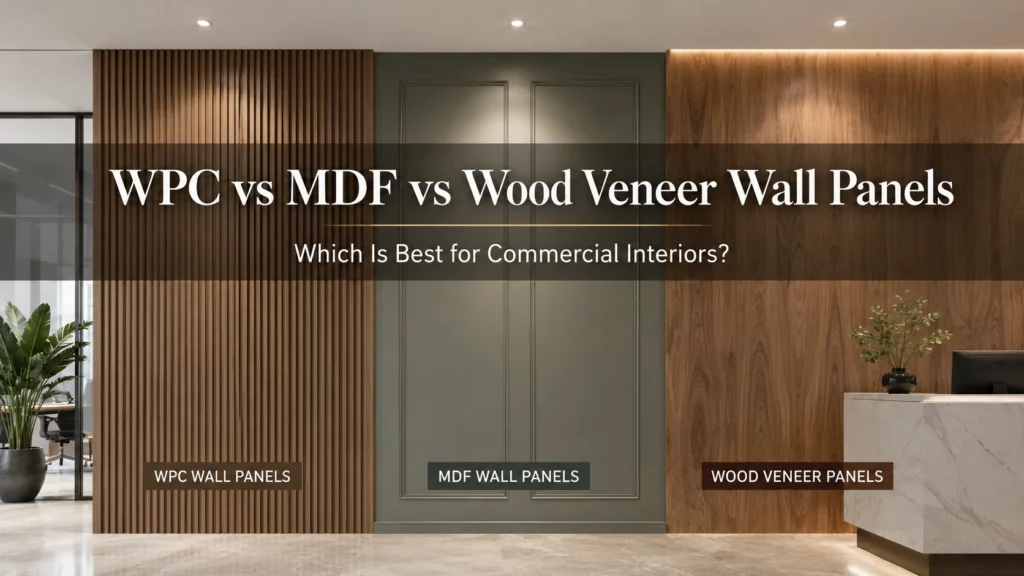
For developers and contractors working on hotels, apartments, offices, schools, healthcare spaces, and retail interiors, low-VOC wall panels are no longer a small detail in the finish schedule. Wall surfaces cover large areas, stay exposed for years, and can affect indoor air quality, project documentation, tenant comfort, and long-term maintenance planning. In LEED projects, the question is not whether a wall panel looks good in a sample room. The stronger question is whether the material can support green building goals with reliable specifications, practical installation, and the right documentation package.
WPC wall panels are often considered in commercial interiors because they bring decorative value, stable sizing, easier installation, and a broad range of surface effects. For project teams comparing green building materials, WPC panels can be a practical wall solution when the supplier provides clear product data and relevant VOC emissions information for review.
Why Low-VOC Wall Panels Matter in Commercial Building Projects
Indoor air quality has become a serious issue in commercial development. Hotels need guest rooms that feel clean from the first night. Offices need healthy interiors for long working hours. Schools and clinics require careful material selection because occupants may be more sensitive to air quality problems. In all of these spaces, wall panels, flooring, adhesives, coatings, furniture, and cleaning products can all affect the indoor environment.
That is why low-emitting materials are a key concern during interior specification. Developers are not only buying decorative wall panels. They are managing risk. A material with unclear VOC emissions data can slow down submittal review, create questions from consultants, and make the approval process harder than necessary.
For commercial wall panels, early screening is better than late correction. Before large orders are placed, project teams should confirm what reports, declarations, product data sheets, and installation details are available. This is especially important for projects with LEED material documentation requirements or internal green building standards.
How LEED Projects Look at Wall Panels and Material Documentation
LEED projects usually require project teams to document selected materials in a structured way. Wall panels may be reviewed under low-emitting materials, indoor air quality building materials, and green building material documentation, depending on the project version and consultant requirements.
A common mistake is to describe a product itself as “LEED certified.” Safer and more accurate language is different. A wall panel can support a LEED project only when it fits the project requirements and is backed by suitable documentation. Developers should ask for VOC emissions reports, product data sheets, manufacturer declarations, safety data sheets, installation instructions, and maintenance guidance before approving the material.
This approach helps the design team, contractor, green building consultant, and purchasing department work from the same information. It also helps avoid last-minute substitutions, which can affect cost, schedule, and design consistency.
Why WPC Wall Panels Are Considered for Green Building Interiors
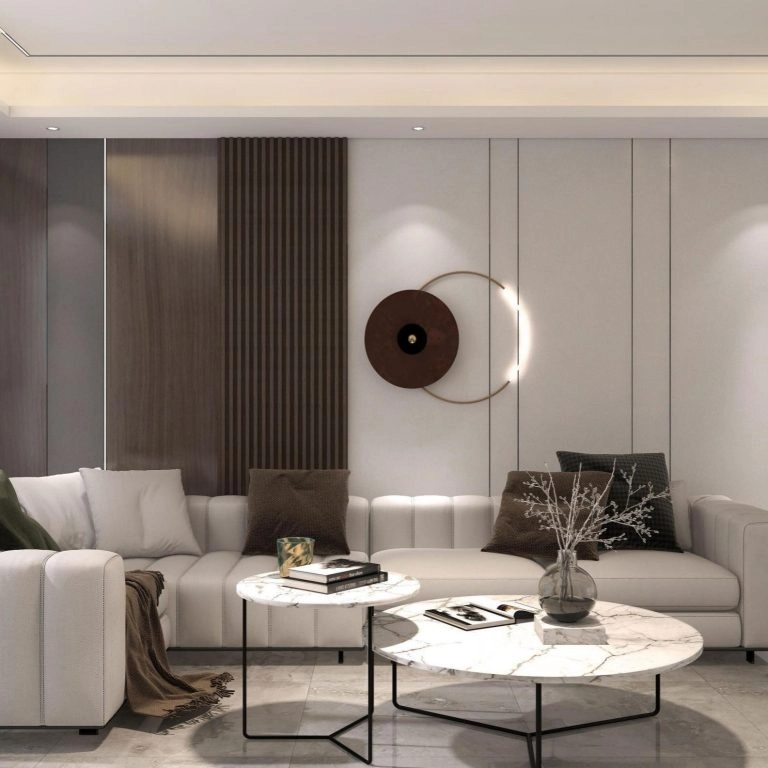
WPC wall panels are used in commercial interiors because they combine design flexibility with practical handling on site. They can be applied in hotel corridors, apartment lobbies, office feature walls, retail spaces, restaurant interiors, public areas, and decorative wall cladding projects. For developers, this matters because one project may require several visual effects while still needing consistent supply from the same commercial wall panel supplier.
Latitude Interiors Limited supplies WPC wall panel products with product data sheets showing density options of 0.65/0.75 ton/m³, thickness options of 5mm/8mm, width options of 900mm/1200mm, and length options from 2400mm to 3000mm or 3600mm. The listed finish includes marble, which supports interior design schemes that need a clean, stone-like visual without the weight and installation complexity of some traditional wall materials.
For B2B buyers, these details are useful during early specification. Thickness affects handling and installation planning. Width and length affect layout, cutting loss, transportation, and wall coverage. Finish selection affects the final interior style. A developer planning a hotel lobby, for example, may care about large-format visual continuity, while a contractor working on apartment corridors may place more focus on installation speed and repeatable dimensions.
What Developers Should Request Before Specifying WPC Panels
VOC Emissions Reports
The first document to request is a VOC emissions report, when available. The report should match the product type being specified, not only a general material family. Project teams should check the testing method, tested product name, issuing laboratory, date, and whether the report still meets the project’s documentation rules.
For low-VOC wall panel documentation, vague claims are not enough. A developer needs traceable paperwork that can be submitted, reviewed, and stored with the project file.
Product Data Sheets and Technical Specifications
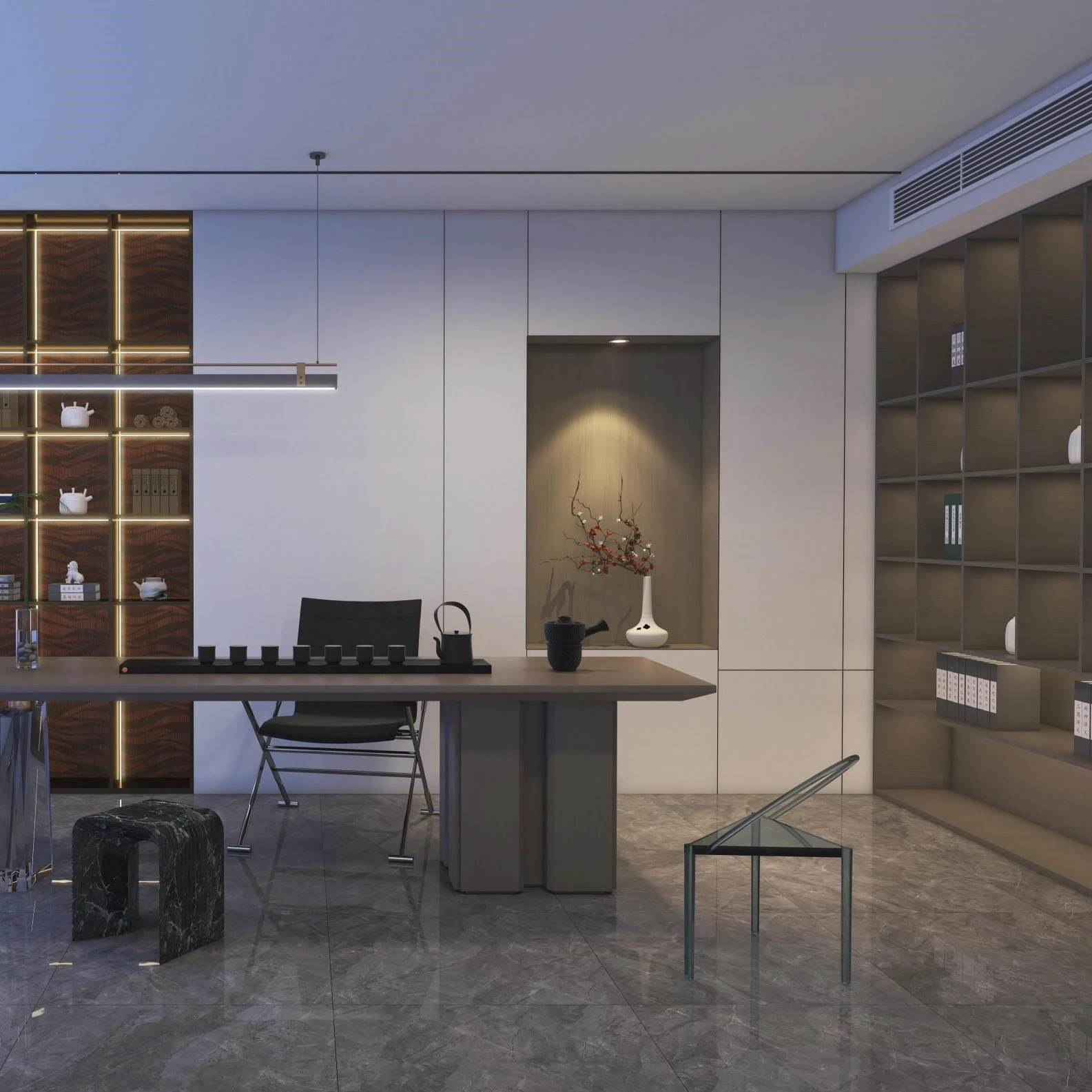
A wall panel product data sheet should include basic but important information: material category, density, thickness, width, length, finish, installation method, packing details, and recommended application areas. These details help contractors calculate quantities, plan installation, review substrate conditions, and reduce avoidable waste.
Latitude Interiors Limited provides WPC wall panel product information in a format that supports early project comparison, including density, thickness, width, length, and finish data. For wholesale buyers, contractors, and distributors, this kind of information helps move a project from design intent to actual procurement.
Manufacturer Declarations and Project Submittals
LEED material submittals often require more than a product brochure. Developers should ask for manufacturer declarations, safety data sheets, sample approval records, installation guides, and maintenance instructions. When available, formaldehyde-related information and VOC emissions documentation should also be included.
Good documentation protects the project team. It gives consultants a clearer basis for review and gives purchasing teams fewer unknowns before bulk orders are confirmed.
How Latitude Interiors Limited Supports B2B Wall Panel Projects
Latitude Interiors Limited was established in 2008 and focuses on the research, development, and production of WPC, SPC solid core wall panels, flooring, and overall home decoration materials. The company reports a production base of more than 40,000 square meters, an independent professional research laboratory, and 25 advanced production lines. It also provides factory-direct supply, sample support, OEM/ODM service, quality inspection, packaging, transportation, and after-sales support.
For developers, contractors, wholesalers, and distributors, this manufacturing background matters. Commercial wall panel projects depend on stable samples, repeatable dimensions, controlled quality, and delivery coordination. A supplier with production capacity and project service support can help reduce uncertainty from specification to installation.
Conclusion
Choosing WPC wall panels for LEED projects should be treated as both a design decision and a documentation decision. Low-VOC wall panels can support indoor air quality goals, but project teams still need clear VOC emissions reports, product data sheets, manufacturer declarations, installation guidance, and maintenance information. Latitude Interiors Limited offers WPC wall panels with defined product parameters and B2B supply support, making the company a practical candidate for developers and contractors sourcing green building materials for commercial interiors.
FAQs
Q1: Are WPC wall panels allowed in LEED projects?
A: WPC wall panels can be considered for LEED projects when they meet the project’s material requirements and are supported by suitable documentation. Developers should review VOC emissions reports, product data sheets, manufacturer declarations, and installation information before specification.
Q2: What documents are needed for low-VOC wall panels in a LEED project?
A: Developers usually need a VOC emissions report, product data sheet, safety data sheet, manufacturer declaration, sample approval record, installation guide, and maintenance guide. These documents help support LEED material documentation and project submittal review.
Q3: How do low-VOC wall panels improve indoor air quality?
A: Low-VOC wall panels help reduce the potential source of indoor chemical emissions from wall finishes. When used with other low-emitting materials, proper ventilation, and suitable adhesives or accessories, they can support better indoor air quality in commercial interiors.
Q4: How should developers choose WPC wall panels for commercial interiors?
A: Developers should compare VOC documentation, panel density, thickness, width, length, surface finish, installation method, supplier capacity, sample quality, and batch consistency. For large commercial projects, product performance and documentation readiness should be reviewed before bulk purchasing.
Q5: What makes Latitude Interiors Limited suitable for WPC wall panel projects?
A: Latitude Interiors Limited supports WPC wall panel projects with manufacturing capacity, product data sheets, sample service, OEM/ODM support, quality inspection, packaging, transportation, and after-sales service. These capabilities are useful for developers, contractors, wholesalers, and distributors handling commercial interior projects.