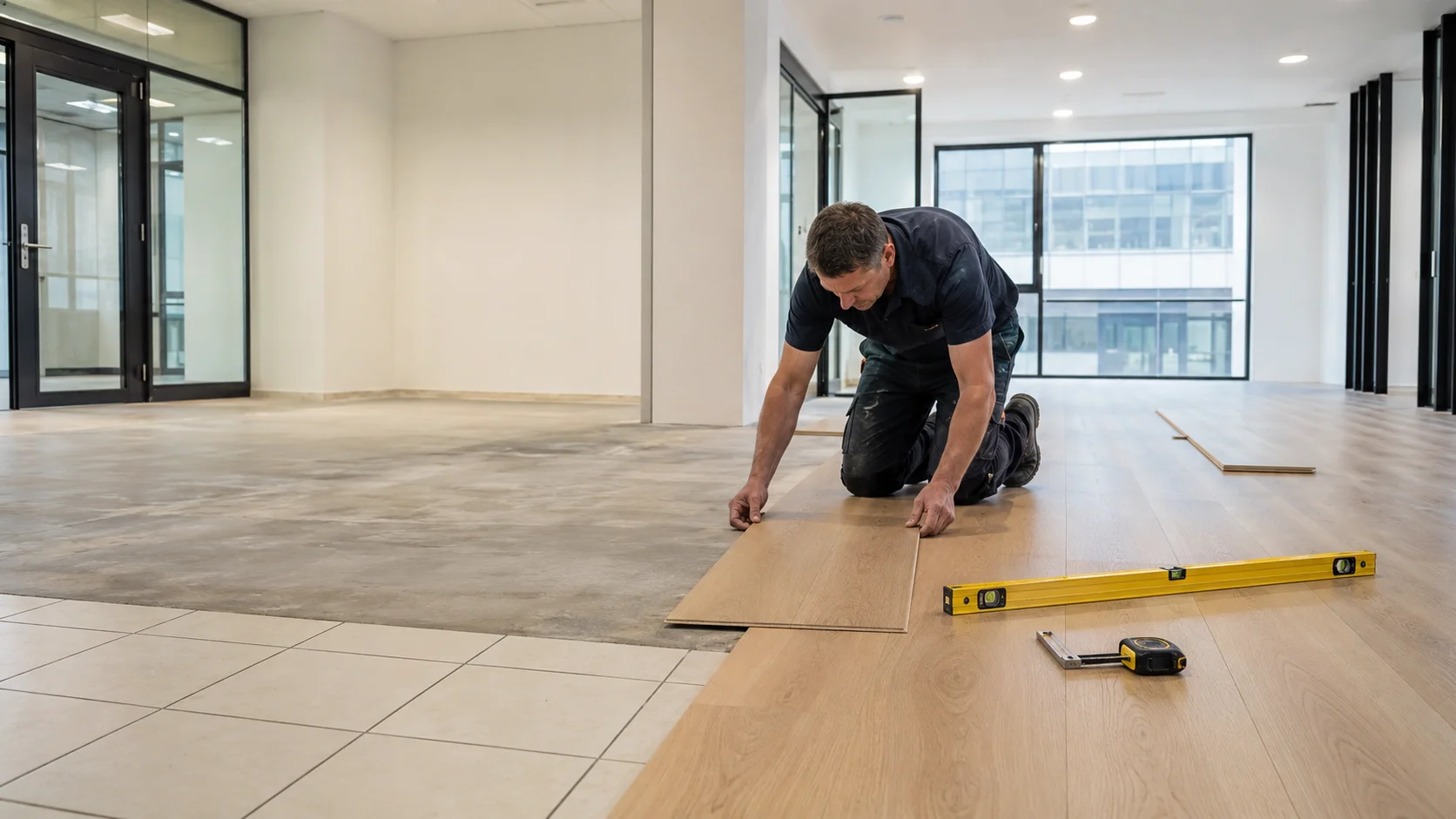
Installing SPC flooring over existing tile or concrete can reduce demolition work, noise, dust, and business downtime in commercial renovations. But the decision should not be made only because the old floor is hard. For offices, retail stores, schools, hotels, malls, and other commercial interiors, the existing surface must be clean, flat, dry, and structurally sound before SPC flooring is considered.
The main question is not simply “Can SPC flooring be installed over tile or concrete?” A better question is: “Can this specific old floor support the selected SPC flooring system without creating height problems, moisture issues, joint stress, hollow sounds, or premature failure?”
Can SPC Flooring Be Installed Over Existing Tile or Concrete?
SPC flooring can often be installed over existing hard surfaces such as ceramic tile or concrete, provided the substrate meets the flooring supplier’s installation requirements. This is why SPC flooring is frequently considered for commercial renovation projects where removing the old floor would create too much disruption.
Direct installation is most practical when the old tile or concrete is stable, dry, level within the required tolerance, free from loose material, and suitable for the chosen installation method. It is less suitable when the existing surface has movement, moisture problems, soft layers, severe cracking, deep grout lines, or uneven transitions.
When Direct Installation Is a Good Option
Direct installation may be a good option for commercial spaces where the existing ceramic tile is firmly bonded, the concrete slab is dry, and the finished floor height can be managed at doorways and transitions. This approach can help reduce demolition time in occupied buildings, leased retail spaces, hotel corridors, offices, and light commercial interiors.
For buyers comparing commercial SPC flooring options, the key is to match product structure with site conditions. Board thickness, wear layer, surface texture, backing, plank size, and installation system may all affect whether the product is suitable for the renovation. These details should be verified against the supplier’s product specification before purchase.
When the Existing Floor Should Be Repaired or Removed
The usage of SPC flooring should never be considered as a solution to a deteriorating subfloor. The loose tile, hollow tile, cracked concrete, soft subflooring, carpeted floors, highly cushioned vinyl, oil-contaminated surface, or moisture-active concrete can all pose a risk once the flooring is installed.
Signs indicating that action needs to be taken before installing bulk SPC flooring include movement of tiles when subjected to pressure, cracks on the slab, dusty or powdery concrete, uneven heights across the rooms, moisture stains, and grout lines that are clearly visible underneath the new flooring.
Why Subfloor Preparation Matters More in Commercial Renovations
Commercial projects carry higher consequences than small residential updates. A failed floor may interrupt trading hours, create tenant complaints, affect cleaning schedules, or require costly rework after fixtures are already installed. That is why SPC flooring subfloor preparation should be treated as part of the procurement decision, not only as an installer’s task.
Flat, Dry, Clean and Structurally Sound: The Four Checks
A level surface ensures that the SPC planks remain level and minimizes any stress placed on the locking system. Dry conditions are crucial, particularly in cases of concrete, where vapors can interfere with the flooring system despite being vapor-resistant by design. The absence of any debris, adhesives, dust, paint, greasy surfaces, or mortars ensures that there will be no bumps or uneven areas. Structural integrity is a way of confirming that the current floor is stable enough and will not move while in use.
These should all be done prior to purchasing commercial flooring in the commercial renovation process. In case the surface is not up to the specifications of the flooring manufacturer, patching, grinding, skimming, or leveling might be required.
Commercial Traffic, Rolling Loads and Downtime Risks
Commercial flooring must handle more than foot traffic. Office chairs, display fixtures, cleaning machines, carts, trolleys, and maintenance equipment can all increase pressure on the installed floor. A minor unevenness that looks acceptable in an empty room may become a problem after shelving, furniture, or rolling loads are introduced.
This is also where product selection matters. A project in a light office may have different requirements from a retail aisle, school corridor, or hotel public area. Buyers should confirm expected traffic, cleaning methods, surface texture, wear layer, and installation method before treating SPC flooring as a direct overlay solution.
Installing SPC Flooring Over Existing Tile
Installing SPC flooring over existing tile is one of the most common renovation questions because tile removal is noisy, dusty, and labor-intensive. In many projects, keeping the tile base can save time. The tile, however, must act like a stable subfloor.
Check Tile Bonding, Cracks and Hollow Spots Before Installation
Prior to the installation of SPC flooring on top of the ceramic tile floor, it is necessary to examine the existing tiles. Any hollow or broken tiles, loose corners, or any other type of unsteady surface may lead to vibrations being transferred to the new SPC floor. When the existing tile is not properly installed, there is no guarantee that the new SPC floor will solve the problem.
A buyer must demand a site inspection instead of photos alone for commercial projects. Spot-checking of any unstable tile in large-scale areas is vital and should be done in traffic areas, entryways, hallways, and wet zones. Any unstable tile should be repaired or removed before installation begins.
Fill Grout Lines and Correct Lippage Before Laying SPC
One issue that might arise if the SPC flooring is installed over tile is the depth of the grout lines and the problem of tile lippage. When the grout lines are too deep or the tiles have uneven edges, the design may appear through the flooring or the floor may produce a hollow noise, as well as put unequal weight on the joint.
A skim coat, patching compound, or floor leveler may be needed to create a smoother surface. The correct material depends on the old tile, project size, installation method, and product instructions. Procurement teams should confirm whether grout filling is included in the installation quotation, because this step can affect both cost and schedule.
Check Finished Floor Height, Doors and Transition Areas
Adding SPC over existing tile increases the finished floor height. In commercial renovations, this can affect entrance thresholds, elevator lobbies, bathroom transitions, doors, baseboards, ramps, stair edges, and adjacent flooring materials.
These details should be checked before ordering. A floor that performs well in the open area may still create a problem at a doorway or transition strip if height buildup is ignored. For projects with accessibility requirements, the transition plan should be confirmed early.
Installing SPC Flooring Over Concrete
SPC flooring over concrete is common in commercial interiors, but concrete needs careful evaluation. A slab may look solid while still holding moisture, dusting at the surface, or having high and low spots that affect the final installation.
Test Moisture Before Installing SPC Flooring Over Concrete
Concrete moisture is one of the most important issues when installing SPC flooring over a concrete slab. SPC flooring may be waterproof at the plank level, but moisture vapor from concrete can still affect the flooring system, backing, underlayment, adhesive, odor, or indoor conditions.
Moisture testing and vapor barrier requirements should be verified against the product specification and installation guide. New concrete may need curing time before flooring is installed. Ground-level and below-grade slabs require extra attention because moisture conditions can vary by building age, climate, and slab construction.
Repair Cracks, Dusting, High Spots and Low Spots
The concrete must be clean, dense, and smooth prior to the installation of SPC. Any cracks, debris, dusty surface, residues from adhesives, paints, oils, and other imperfections will hinder the installation process. High areas may require grinding, whereas low areas may require repairs or leveling.
However, in commercial constructions, the aim is not only to smooth the floor. The floor must be able to support the flooring even when in use. This means that if the floor is uneven to the point that it makes the floor rock or creates joints, the floor needs to be fixed prior to SPC installation.
Choosing the Right SPC Flooring Type for Commercial Renovation
The right SPC flooring for renovation depends on the old surface, project size, traffic level, maintenance expectations, and installation method. A product suitable for one building may not be the right choice for another.
Click-Lock, Loose Lay or Glue-Down: Which Method Fits the Site?
Click-lock SPC flooring is often considered for fast renovation because it can reduce adhesive work and speed up installation when the substrate is suitable. Loose lay and glue-down options may be considered in some commercial spaces, depending on traffic, stability requirements, installer preference, and supplier guidance.
No installation method should be selected in isolation. If the substrate is uneven, damp, or unstable, even a strong SPC plank can perform poorly. Buyers should confirm whether the product is approved for installation over existing tile or concrete and what accessories are required.
Thickness, Wear Layer, Surface Texture and Backing
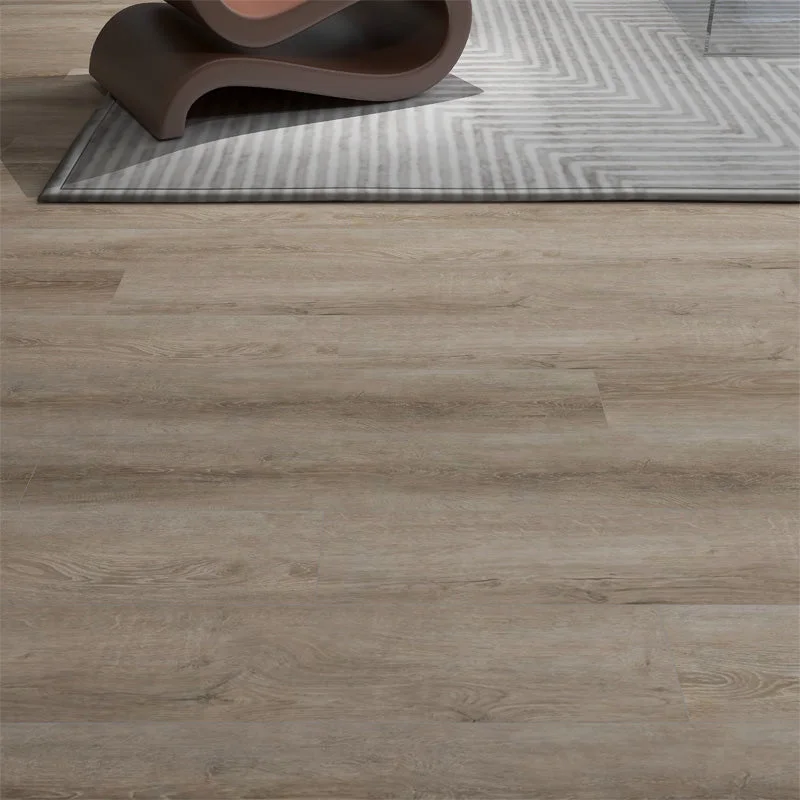
Commercial buyers should review thickness, wear layer, surface texture, backing material, plank size, and installation system before selecting SPC flooring for renovation. For example, Latitude Interiors lists SPC flooring options with board thickness choices, wear layer options, wood grain, marble grain, stone, and carpet surface textures, plus IXPE or EVA backing options depending on the product.
The conveniently installable SPC flooring for commercial areas can be used as a product reference when evaluating commercial and renovation-related SPC flooring needs. Final suitability should still be checked against the application, substrate condition, traffic level, and product specification.
SPC Over Tile or Concrete: Commercial Renovation Decision Matrix
| Existing Surface | Can SPC Be Installed Over It? | Required Check | Main Risk | Procurement Note |
|---|---|---|---|---|
| Existing ceramic tile | Often possible | Loose tile, cracks, grout depth, lippage | Hollow sound, telegraphing, height buildup | Confirm over-tile approval and leveling needs |
| Concrete slab | Often possible | Moisture, cracks, dust, flatness | Vapor issues, joint stress, uneven floor | Confirm moisture barrier and testing requirements |
| Uneven concrete | Not directly | High spots and low spots | Rocking, gaps, locking damage | Level or repair before installation |
| Carpet or soft floor | Not suitable | Softness and movement | Deflection, indentation, joint failure | Remove before SPC installation |
| Old cushioned vinyl | Risky | Layer thickness and bonding | Instability, compression | Verify with supplier before quoting |
What to Ask an SPC Flooring Supplier Before Ordering
A commercial renovation article should end where the buyer’s decision begins: what information should be sent to the supplier, and what the supplier should help confirm. A qualified supplier should help buyers think beyond color and price.
RFQ Information Buyers Should Prepare
Before requesting a quotation, buyers should prepare the project type, total area, existing floor material, photos of the current substrate, expected traffic level, moisture concerns, target thickness, surface texture preference, installation method, sample requirements, and estimated quantity.
For old tile projects, include photos of grout lines, cracks, hollow areas, and door transitions. For concrete projects, include whether the slab is new, ground level, below grade, or exposed to moisture. These details help reduce wrong product selection and installation disputes.
Supplier Documents and Compatibility Questions
Procurement teams should ask for product specifications, installation guidance, subfloor requirements, backing options, accessory recommendations, and sample availability. If the project involves retail, office, school, hotel, hospital, mall, or other commercial use, the supplier should know the application before recommending a product.
Latitude Interiors offers SPC flooring products for residential and commercial spaces, with listed options for board thickness, wear layer, surface texture, backing, plank size, and installation systems across different products. Buyers who need background on the company can review About Latitude Interiors Limited before submitting project details. For renovation inquiries, contact Latitude Interiors with substrate photos, target quantity, application area, and required specifications.
Conclusion
Installing SPC flooring over existing tile or concrete can be a practical approach for commercial renovations when the old floor is stable, flat, dry, clean, and compatible with the selected product. The main risks come from skipping substrate checks, ignoring concrete moisture, leaving deep grout lines untreated, or choosing a product before confirming the site conditions.
For commercial buyers, the next step is to collect the right project information: existing floor type, photos, area size, moisture concerns, expected traffic, installation method, target thickness, surface texture, sample needs, and quantity. These details allow Latitude Interiors to help match the renovation conditions with suitable SPC flooring options without overstating what any one product can do.
FAQs
Can SPC flooring be installed over old ceramic tile?
Yes, SPC flooring can often be installed over old ceramic tile if the tile is firmly bonded, flat, clean, and free from major cracks or hollow spots. Deep grout lines or uneven tile edges may need skim coating or leveling before installation.
Do grout lines need to be filled before installing SPC flooring?
Grout lines should be filled if they are wide, deep, or likely to show through the new floor. Filling grout lines helps reduce telegraphing, hollow sounds, and uneven support under the SPC flooring.
Can SPC flooring be installed directly over concrete?
SPC flooring can usually be installed over concrete if the slab is dry, clean, flat, and structurally sound. Moisture testing and vapor barrier requirements should be checked against the product specification before installation.
Is click-lock SPC flooring suitable for commercial renovation?
Click-lock SPC flooring may be suitable for many commercial renovation projects when the substrate is stable and properly prepared. Suitability depends on traffic level, floor flatness, moisture conditions, plank specification, and installation instructions.
What should buyers confirm before ordering SPC flooring for renovation?
Buyers should confirm existing floor type, substrate condition, moisture risk, thickness, wear layer, surface texture, backing, installation method, accessories, sample requirements, quantity, and commercial application before placing an order.