
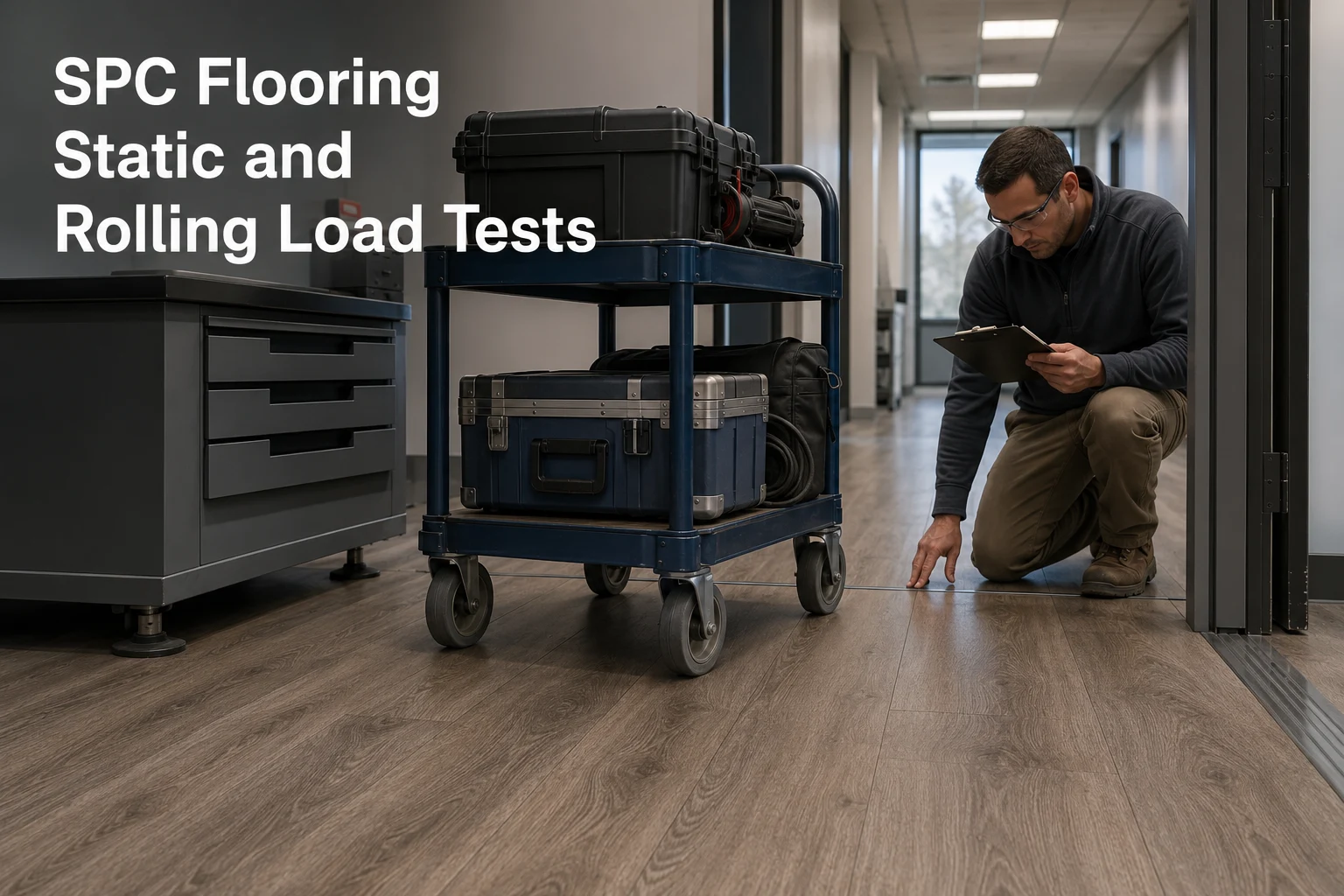
A “commercial” label does not prove that an SPC floor can support concentrated equipment loads or repeated cart traffic. Before ordering, contractors should compare actual conditions with the product’s SPC flooring static load test and SPC flooring rolling load test data. The real question is whether the exact flooring, backing, joints, installation, and substrate have been evaluated under comparable conditions.
Start With the Load: Static Pressure Is Not the Same as Rolling Traffic
Begin with a load schedule, not a flooring thickness. Record what contacts the floor, the load at each contact point, whether it remains stationary, and how often it moves or turns. A rack leg creates sustained pressure; a loaded cart adds changing pressure and joint stress. One test cannot answer both conditions.
| Project condition | Typical examples | Main risk | Evidence to request |
|---|---|---|---|
| Static point load | Racks, cabinets, fixed equipment | Residual indentation or local compression | ASTM F970 or F1914 data |
| Repeated rolling load | Carts, mobile equipment, wheeled cases | Joint, surface, backing, or bond damage | ASTM F2753 data |
| Pivoting or tight turns | Carts turning at doors or workstations | Concentrated shear and edge stress | Test details plus a project mock-up |
| Impact | Dropped tools or equipment | Chipping, cracking, or surface damage | A separate impact assessment |
Why SPC Flooring Can Dent, Crack, or Develop Joint Damage Under Load
SPC flooring indentation resistance depends on load concentration, wheel geometry, construction, backing, joints, installation, substrate, and traffic pattern.
Concentrated Loads, Wheel Geometry, and Repeated Turning
Wheel diameter, tread width, and material change the stress created by the same cart. Small, narrow, or hard wheels concentrate load. Turning in place can be more demanding than straight travel because it adds lateral stress at plank edges.
Provide the load per wheel—not only total equipment weight—plus wheel dimensions, material, route, turns, frequency, and loaded dwell time. These details show whether published dynamic rolling load flooring data are relevant or a project mock-up is needed.
Floating Joints, Soft Backings, Adhesives, and Subfloor Deflection
An SPC plank is only one part of the system. Click-lock joints may flex over substrate low spots or compressible backing. In adhered installations, adhesive application, curing, and substrate bond become part of the load path. An unapproved underlayment may increase movement.
Distinguish an uninstalled-plank test from an assembly test. Confirm the backing, joint, installation, adhesive, and substrate used. If they differ from the specification, treat the result as supporting information rather than proof of installed performance.
How to Read SPC Flooring Static and Rolling Load Test Reports
A useful SPC flooring test report identifies the exact product and conditions. A one-line “pass” or isolated PSI value is not enough.
ASTM F970 and F1914: Reading Static Load and Residual Indentation Results
ASTM F970-22 measures recovery after static loading of uninstalled floor covering and reports residual indentation after defined loading and recovery periods. ASTM states that it does not indicate installed floor performance. ASTM F1914 addresses short-term and residual indentation.
Verify the standard revision, load, indentor, exposure and recovery conditions, specimen construction, and reported indentation. If the method was modified, do not compare its result directly with a standard-method value. Static data can compare materials under controlled conditions, but cannot show whether joints, adhesive, backing, and substrate will withstand carts.
ASTM F2753: What a Dynamic Rolling Load “Pass” Must Include
ASTM F2753-21 evaluates dynamic rolling load effects on a resilient floor covering system. It can assess a flooring, adhesive, and underlayment combination and may evaluate joint performance.
Ask which product, backing, installation, substrate, wheel, load, cycles, path, and evaluation criteria were used. A straight-path result may not represent frequent loaded turns. If the assembly or wheel conditions do not match, request an equivalent test or controlled mock-up.
Before accepting a report, check:
- Exact product code, thickness, core, wear layer, backing, and locking system
- Installation method, substrate, underlayment, and adhesive
- Standard number, revision, laboratory, and test date
- Load, wheel specifications, cycles, route, and turning conditions
- Measured result, observed damage, and acceptance criteria
How to Choose the Right SPC Construction and Installation Method
Contractors can review SPC flooring options for commercial projects to identify available configurations, but the final selection should follow test evidence and project conditions rather than a generic thickness rule.
When Click-Lock SPC May Be Acceptable—and When Glue-Down Should Be Evaluated
Click-lock SPC may be considered where the substrate meets installation requirements and wheeled traffic is consistent with product documentation and warranty. A rigid core alone does not prove suitability for repeated heavy carts; joints, backing, expansion details, transitions, and subfloor flatness still matter.
Glue-down construction merits evaluation for firmer support, controlled transitions, or frequent rolling movement, but is not automatically correct. Confirm adhesive compatibility, substrate preparation, cure time, and assembly-level evidence. Request written approval for either proposed system.
Why Wear Layer, Total Thickness, and Backing Are Not Load Ratings
A thicker wear layer addresses surface wear; it does not prove better residual indentation or rolling load resistance. Total thickness and backing may affect acoustics, joint behavior, and local compression, but their effect depends on the full construction.
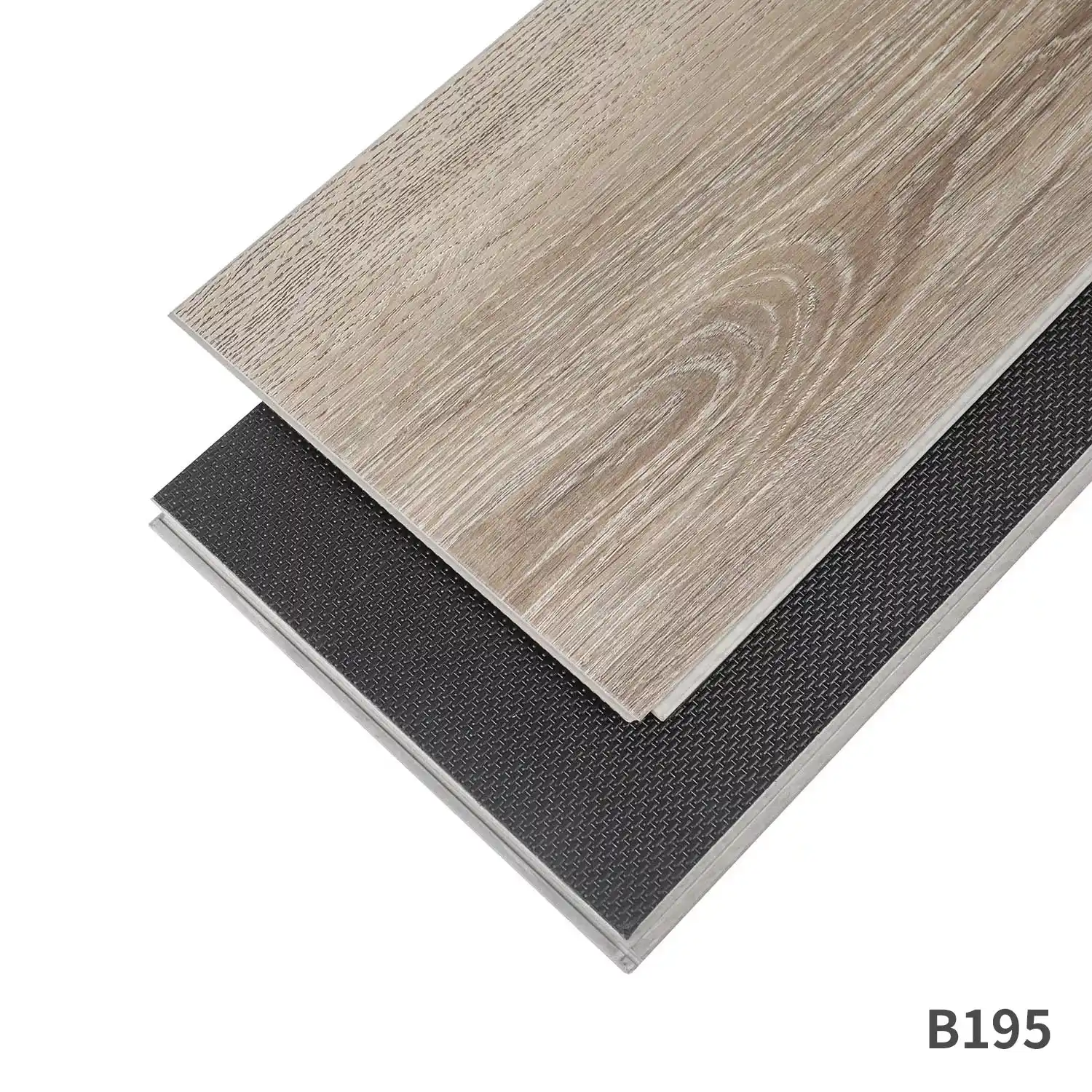
Latitude Interiors lists 4.0–8.0 mm board thicknesses, 0.3 mm and 0.5 mm wear layers, several backing options, and different configurations. A configurable SPC flooring for commercial applications page shows possible formats, but the selected SKU and test documents must still match.
How Contractors Can Prevent Load-Related Failures Before Installation
Build a Project Load Schedule and Test the Actual Use Condition
A project load schedule should identify fixed equipment, racks, carts, chairs, maintenance machines, and move-in loads. For each rolling item, record loaded weight, wheel count, dimensions and material, travel frequency, turns, and dwell time.
Compare this schedule with the report and warranty. Use a mock-up when loads exceed documented conditions, carts turn repeatedly, or the proposed assembly differs from the tested system. Reproduce the flooring assembly and representative traffic, then inspect joints, indentation, movement, surface appearance, and bond condition.
Risk reduction should also address:
- Subfloor strength, flatness, moisture condition, and local voids
- Approved underlayment or attached backing
- Adhesive selection, application, and cure requirements
- Expansion gaps, perimeter restraint, and transition details
- Suitable casters, load-distribution plates, and move-in protection
- Replacement material from the approved production specification
Pre-Order RFQ Checklist and SPC Flooring Supplier Selection
Documents and Written Confirmations to Request From the Supplier
An RFQ should describe the application and operating condition instead of asking only for “commercial SPC.” Request the technical data sheet, applicable load reports, installation instructions, maintenance guidance, warranty, and sample. Confirm that each document applies to the quoted product, backing, and installation.
The company profile and manufacturing focus page provides background on Latitude Interiors and its SPC activities. Buyers can also review Latitude Interiors before sending the load schedule, required dimensions, quantity, installation approach, and document list.
How to Compare Suppliers and Identify Load-Resistance Red Flags
Compare offers using the same load assumptions. “Commercial grade,” “heavy duty,” and a thicker wear layer do not replace test evidence. Red flags include reports for another model, missing wheel or cycle details, uninstalled-material results presented as system performance, or unclear warranty coverage.
A qualified supplier should ask about the application, loads, wheels, substrate, installation, and records before confirming a product. Latitude Interiors publishes commercial-use SPC configurations with selectable thicknesses, wear layers, finishes, and backings. The quoted configuration must still match technical documentation and jobsite conditions.
Conclusion
Specify SPC flooring under static and rolling loads as a system, not from one thickness or PSI claim. Define the load, separate static indentation from rolling traffic, match reports to the product and installation, review warranty limits, and use a mock-up when evidence does not represent the project.
For a project review, contact Latitude Interiors with the application, product format, quantity, fixed loads, loaded cart weight, wheel specifications, route, substrate, and installation method. This supports a focused discussion of possible configurations and required documents.
Frequently Asked Questions
Does SPC flooring dent under heavy equipment?
It may. The result depends on point load, contact area, duration, construction, backing, installation, and substrate. Review exact-product ASTM F970 or F1914 data, then assess the installed system.
Can click-lock SPC flooring handle rolling chairs and carts?
It depends on wheel load, geometry, material, traffic, turns, joints, backing, and subfloor. Request dynamic rolling load data for the proposed construction and check the instructions and warranty.
Does a thicker wear layer improve SPC flooring indentation resistance?
Not necessarily. Wear-layer thickness mainly relates to abrasion. Indentation and rolling performance also involve the core, backing, joints, installation, substrate, and load condition.
What should an ASTM F2753 rolling load report include?
It should identify the flooring system, substrate, wheel, load, cycles, path, joints, observations, and evaluation criteria. A “pass” without these details is difficult to apply.