
Selecting WPC flooring for hotel rooms usually begins at the mock-up room, not at the color board. A plank may look suitable in a sample folder yet perform differently once it is installed beneath a heavy bed, exposed to rolling luggage, and cleaned every day by housekeeping. Hotel developers, fit-out contractors, designers, and purchasing teams must balance guest comfort with indentation resistance, acoustic performance, maintenance routines, and replacement planning.
Latitude Interiors Limited supplies WPC and SPC flooring for commercial and residential projects, giving hospitality buyers access to different core constructions, wear layers, backing options, and surface designs. The material should be selected by hotel zone rather than applied as a single specification throughout the property.
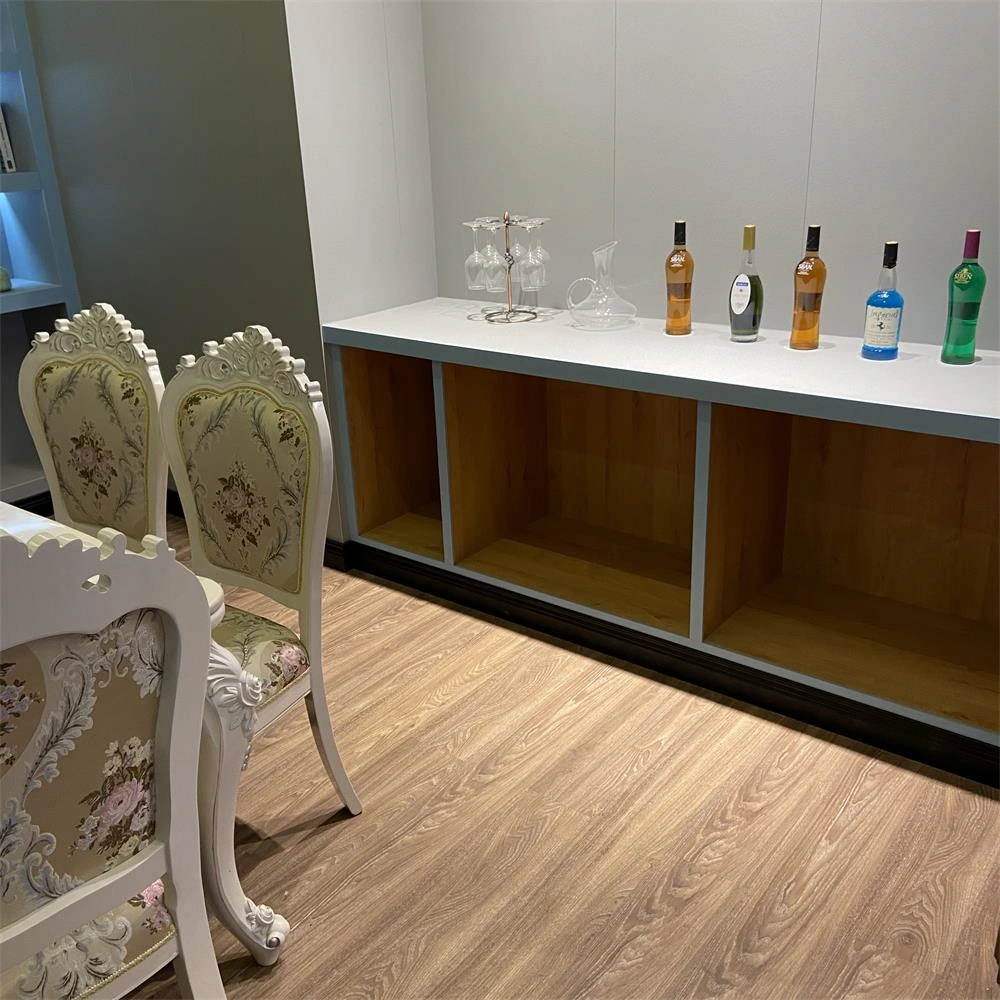
WPC or SPC: Which Is Better for Hotel Guest Rooms?
WPC and SPC are both rigid-core flooring products, but their cores behave differently. WPC uses an expanded polymer core that is lighter and more forgiving underfoot. SPC has a denser solid polymer core, providing greater hardness, dimensional stability, and resistance to indentation.
For comfort-led hotel guest room flooring, WPC is often the more appropriate starting point. It generally feels less rigid beside the bed and produces a softer sound when guests walk across the room. SPC is usually the stronger candidate for corridors, lift lobbies, entrances, and other areas exposed to heavier trolley and suitcase traffic.
| Project consideration | WPC flooring | SPC flooring |
|---|---|---|
| Underfoot response | Softer and more cushioned | Firmer and more rigid |
| Perceived surface warmth | Generally warmer | Usually cooler and harder |
| Walking sound | Often softer | More dependent on the backing system |
| Indentation resistance | Requires careful furniture-load review | Generally stronger |
| Rolling traffic | Suitable for controlled guest room use | Better suited to intensive circulation |
| Typical hotel application | Guest rooms and suites | Corridors and shared areas |
The best flooring for hotel rooms is therefore not necessarily the most rigid product. The correct choice depends on where the floor will be installed and what type of use it must withstand.
Why WPC Feels More Comfortable in Guest Rooms
Underfoot Comfort Around the Bed
Guest room flooring is experienced differently from lobby flooring. Guests often walk barefoot between the bed, bathroom, desk, and minibar. In this setting, a slightly more forgiving floor can make the room feel less institutional and more residential.
WPC flooring for luxury suites and boutique hotel rooms is often specified for this reason. Its expanded core has more give than SPC, creating a gentler response underfoot. The difference is subtle, but it becomes noticeable in rooms where the flooring covers a large area and soft furnishings are limited.
Does WPC Flooring Feel Warmer Than SPC?
WPC usually feels warmer than SPC because its core is less dense and often thicker. This refers to perceived surface temperature rather than guaranteed thermal insulation or reduced heating costs.
Room temperature, backing, subfloor type, floor thickness, and underfloor heating all affect the result. Where radiant heating is planned, the flooring supplier should provide the permitted temperature range and relevant thermal-resistance information before the specification is approved.
Latitude Interiors lists WPC board thicknesses from 4.0 to 8.0 mm, with optional IXPE and EVA backing. These options allow the floor build-up to be coordinated with door clearances, transition profiles, and adjacent bathroom finishes during the design stage.
Is WPC Flooring Quieter Than SPC Flooring?
Quiet flooring for hotel rooms must address more than sound inside the room. A suitcase rolling across the floor may be heard by the guest below, while a chair dragged near the desk may create impact noise through the floor-ceiling assembly.
WPC generally produces a softer walking sound because its core is less dense. WPC flooring with acoustic backing may further reduce the sharp impact associated with hard surfaces. Even so, no plank should be described as soundproof.
The final acoustic result depends on the core, attached backing, concrete slab or timber substrate, ceiling construction, room furnishings, and perimeter detailing. A claim based only on backing thickness is not enough. Procurement teams looking for acoustic flooring for hotels should request test data for the exact plank and backing combination being quoted.
This is particularly important when evaluating how to reduce footstep noise in hotel rooms located above other guestrooms, conference rooms, or quiet public spaces.
Cleaning WPC Flooring During Room Turnover
A low-maintenance hotel flooring system must work within a short room-turn schedule. Housekeeping teams deal with hair, dust, coffee, cosmetics, food residue, suitcase-wheel marks, and occasional water near the entrance or vanity.
WPC flooring can generally be vacuumed and damp-cleaned with a compatible neutral cleaner. Its smooth surface allows debris to be identified quickly during inspection, which is useful when a room must be released before the next check-in.
Easy-to-clean hotel guest room flooring still requires clear maintenance instructions. Excess water should not remain on the floor or enter open joints. Abrasive pads, steam equipment, and strong alkaline or solvent-based products should not be used unless approved for the selected construction.
Preventive measures reduce later maintenance costs. Effective entrance matting limits grit, furniture glides spread concentrated loads, and spare planks from the original production batch simplify future repairs. These details are often more valuable than a broad “easy maintenance” claim.
Durability Under Beds, Furniture, and Rolling Luggage
The wear layer protects the decorative surface from abrasion. The core controls rigidity, joint stability, and resistance to indentation. A thicker wear layer does not automatically prevent a bed leg or wardrobe foot from pressing into a softer core.
Latitude Interiors lists 0.3 mm and 0.5 mm wear-layer options for selected WPC flooring. For commercial WPC flooring used in busy hotels, a 0.5 mm option may be considered where rooms experience regular suitcase traffic, chair movement, and repeated cleaning. The final selection should still be checked against the intended commercial-use classification and warranty.
WPC flooring indentation resistance deserves particular attention around fixed furniture. Beds, desks, sofas, wardrobes, and luggage racks can create high point loads. Broad furniture glides and load-distribution pads help, but the product’s technical data should govern the decision.
SPC generally performs better where rolling traffic and concentrated loads dominate. For that reason, WPC or SPC for hotel corridors is not merely a question of appearance. SPC is often the safer specification for heavily used circulation routes, while WPC remains better aligned with guest comfort inside the room.
Choosing Flooring by Hotel Area
A zoned flooring plan usually performs better than a property-wide specification.
| Hotel area | Practical specification direction |
|---|---|
| Standard guest room | WPC where comfort and softer footfall matter |
| Luxury suite | WPC with a suitable commercial wear layer and backing |
| Long-stay room | WPC or SPC after reviewing furniture and traffic loads |
| Room entrance | SPC may suit heavier suitcase and moisture exposure |
| Guest corridor | SPC generally provides greater rigidity |
| Elevator lobby | SPC or another heavy-commercial surface |
| Suite lounge area | WPC for a warmer residential character |
| Guest bathroom | Select by wet-area, slip, and installation requirements |
This approach also supports phased hotel renovation flooring. Guest rooms can be completed floor by floor while corridor work follows a separate schedule and specification.
What Hotel Buyers Should Confirm Before Ordering
A hotel flooring specification checklist should cover total thickness, wear-layer thickness, core construction, backing type, acoustic data, indentation performance, fire classification, slip resistance, VOC documentation, installation instructions, commercial warranty, batch consistency, spare stock, packaging, minimum order quantity, and lead time.
Latitude Interiors’ WPC flooring for hotel guest room projects is listed with customizable colors and sizes, UV-coated surfaces, wood-, deep-grain-, marble-, stone-, and carpet-inspired textures, 4.0–8.0 mm board thicknesses, and optional IXPE or EVA backing. Because the product page lists several construction and installation options, the final SKU should be confirmed in writing before samples and bulk orders are approved.
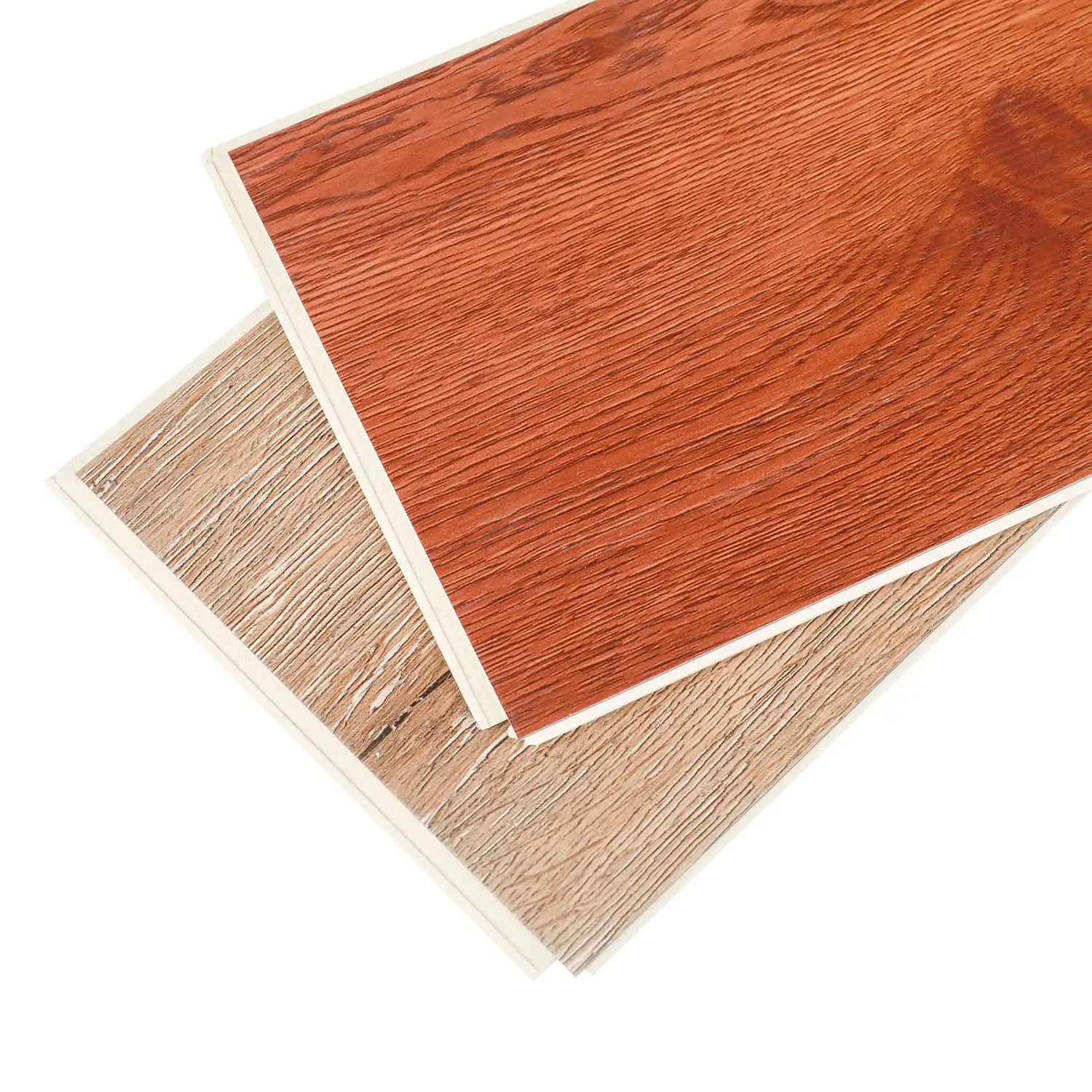
For multi-property work, the commercial WPC flooring supplier must also manage sampling, batch control, inspection, packaging, and replacement stock. Latitude Interiors describes WPC flooring manufacturing and quality-control capabilities that include a production base exceeding 40,000 square meters, 25 production lines, an independent research laboratory, sample support, and dedicated quality inspection.
These details matter when a hotel group needs the same décor and construction across several phases or locations.
Conclusion
WPC is generally better suited to hotel rooms and suites where comfort, perceived warmth, and softer walking sound have priority. SPC is usually more appropriate for corridors, entrances, and shared spaces exposed to heavier rolling loads and greater indentation risk.
The purchasing decision should be based on a confirmed construction rather than a generic material name. Mock-up samples, wear-layer data, acoustic reports, installation instructions, and commercial-use documentation should be reviewed before approval. Hotel developers, contractors, and distributors can request hotel flooring samples and specifications from Latitude Interiors for project-based evaluation.
Frequently Asked Questions
Q1: Is WPC flooring good for hotel guest rooms?
A: WPC flooring is suitable for many hotel guest rooms because it offers a more forgiving surface, warmer perceived feel, and softer walking sound than denser SPC flooring. The selected product must still meet the project’s wear-layer, furniture-load, acoustic, and commercial-warranty requirements.
Q2: Is WPC flooring quieter than SPC flooring?
A: WPC is generally quieter underfoot because its expanded core is less dense. An attached IXPE or EVA backing may also help manage impact sound. The final result depends on the entire floor-ceiling system, so acoustic test data should be reviewed for the exact product configuration.
Q3: Does WPC flooring dent under hotel beds?
A: WPC may be more sensitive to concentrated loads than SPC. Bed legs, wardrobes, desks, and sofas should use broad glides or suitable load-distribution pads. Buyers should also review WPC flooring indentation resistance before approving the product for rooms with heavy fixed furniture.
Q4: How do hotels clean WPC flooring?
A: Hotel housekeeping teams should remove loose debris, clean spills promptly, and damp-clean the floor with an approved neutral cleaner. Excess water, abrasive tools, steam cleaning, and incompatible chemicals should be avoided unless specifically permitted by the product instructions.
Q5: Which is better for hotels, WPC or SPC flooring?
A: WPC is commonly selected for comfort-focused hotel rooms and suites. SPC is generally more suitable for corridors, entrances, and other high-traffic zones where rigidity and resistance to rolling loads are more important.


