When people shop for wall panels—homeowners, contractors, even small cafe owners doing their own remodeling—the same two materials always pop up: WPC and PVC. Both are modern alternatives to paint and traditional wood boards, and honestly, once you’ve installed either one, you’ll understand why they became so common. They’re clean, moisture-proof, and you don’t have to go through the yearly “repaint-and-repair” cycle.
Still, the two materials don’t behave the same. Anyone who has carried both to a job site will tell you immediately: PVC feels like carrying foam boards; WPC feels like carrying real panels. The differences start from there.
What Is WPC Wall Panel?
WPC means Wood Plastic Composite, a mix of wood powder, plant fibers, stone powder, and resin. The wood powder is usually very fine—something like 80–120 mesh, which is basically “powdered enough that you won’t notice the particles.” Manufacturers also add flame retardants, stabilizers, foaming agents, and PE wax. The whole blend gets pushed through an extrusion machine at high temperature, and what comes out is a dense, solid panel.
People like WPC because:
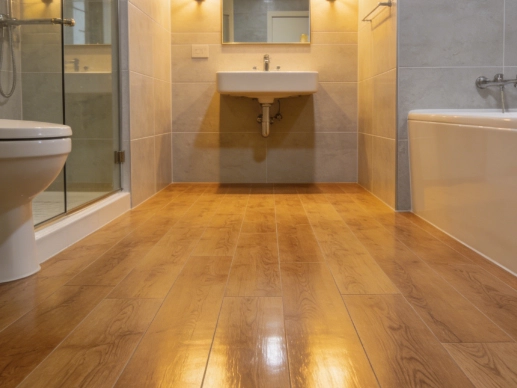
- It handles humidity extremely well. Bathrooms, kitchens, laundry rooms—those areas where normal boards swell at the edges? WPC stays flat.
- Termites ignore it. There’s no real wood grain for them to chew on.
- It has decent fire behavior (B1). Someone once tested a piece with a cigarette during installation—it left an ugly mark but didn’t flare up.
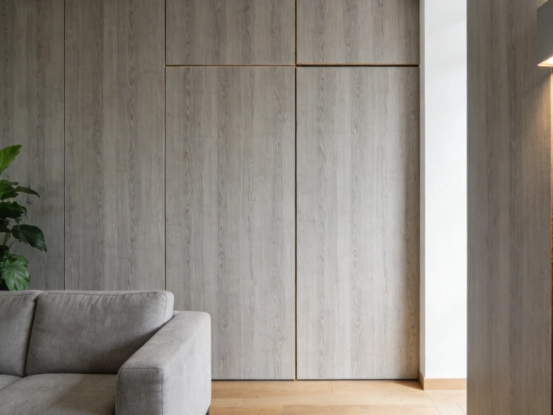
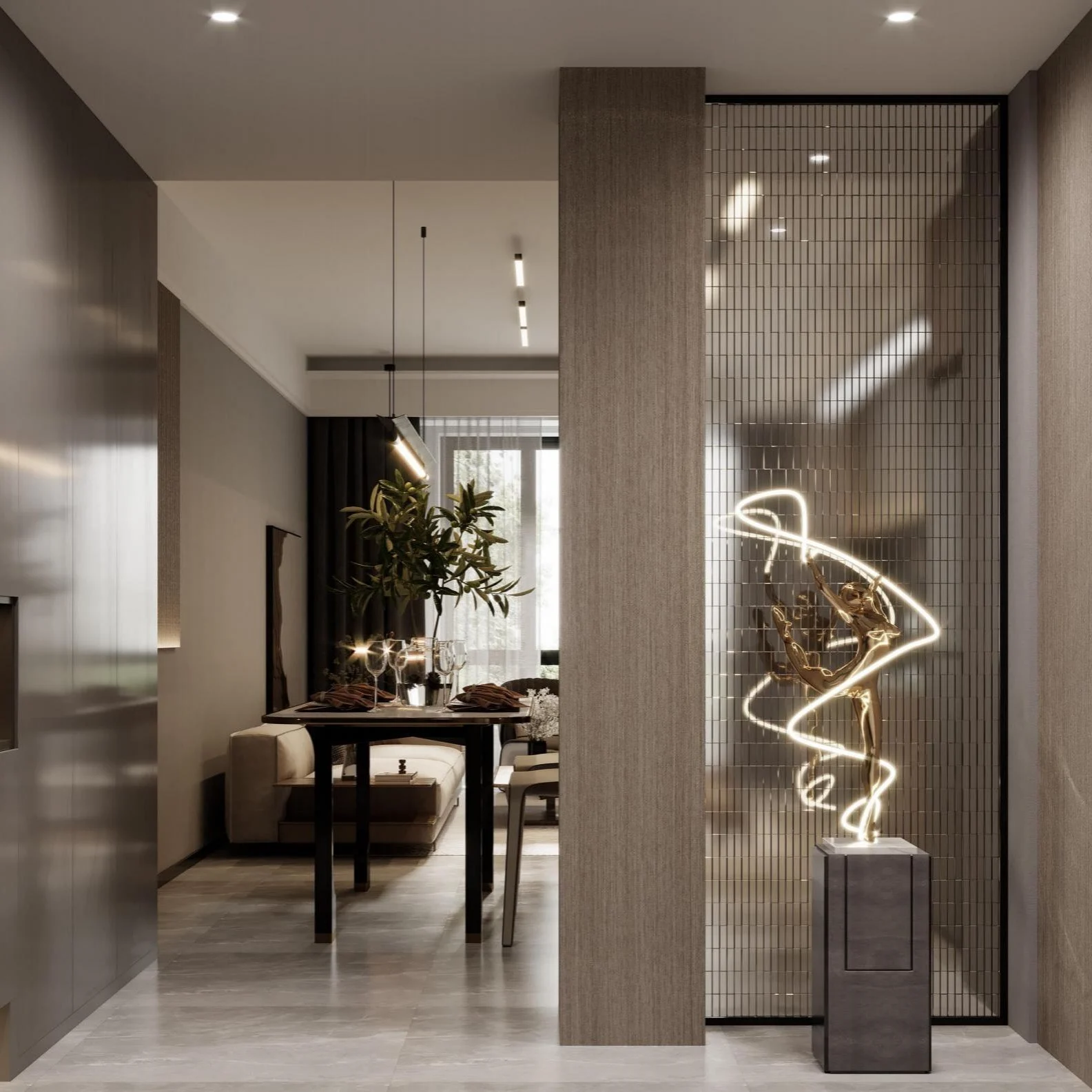
One reason WPC gets attention in interior design is its texture. It looks like wood without the drama of real wood.
What Is PVC Wall Panel?
PVC panels, on the other hand, are made mostly from polyvinyl chloride resin, plus stabilizers and pigments. They’re extruded into light, hollow or semi-solid boards. If WPC feels like a solid instrument, PVC feels like travel luggage—very easy to carry, surprisingly light.
People use PVC because:
- It weighs almost nothing. One person can carry a bunch of panels at once.
- It’s completely waterproof. No swelling, no mold, no soft spots.
- It’s affordable—especially for rental units or quick renovations.
- Installation is simple. Glue, nail, click—done.
PVC is the go-to when a project needs to move quickly or the budget is tight.
WPC vs PVC Panels: 18 Differences You Actually Notice
Below is the practical comparison. Not textbook style—more like how installers explain it to new new apprentices.
| Feature | WPC Wall Panel | PVC Wall Panel |
|---|---|---|
| 1. Composition | Wood powder + plant fiber + stone powder + resin | Mostly PVC resin |
| 2. Look & Feel | Wood-like, textured | Smooth, plastic-like |
| 3. Weight | Heavier | Very light |
| 4. Thickness | Often up to 24 mm | Usually 5–10 mm |
| 5. Installation | Needs screws/clips to keels | Glue or small nails |
| 6. Durability | Strong, holds shape | Moderate |
| 7. Moisture Performance | Great for humid interiors | Also excellent |
| 8. Impact Resistance | High—dense core absorbs hits | Dents more easily |
| 9. Fire Behavior | B1 class | Moderate |
| 10. Maintenance | No swelling or cracking | Easy but can warp a bit with heat |
| 11. Eco Side | More recyclable | Less green |
| 12. Cost | Higher | Lower |
| 13. Sound Performance | Better because of density | Average |
| 14. Thermal Insulation | Strong | Weaker |
| 15. Lifespan | 10–20+ years | Shorter |
| 16. Color/Texture Range | Many wood-like options | More limited |
| 17. Load-bearing | Higher | Lower |
| 18. Application Range | Interior spaces needing strength, texture, acoustic performance | Light indoor use, fast installs |
No outdoor claims, per client requirement.
Why WPC Feels Different from PVC
The wood fibers change the behavior of WPC flooring quite a bit. When fine wood powder mixes with polymer, the panel ends up absorbing force more evenly. Some factories even use sandalwood powder—not for smell, obviously, but because the grain is tight and the particles bond well.
When WPC takes a hit, the foamed composite core spreads the shock, so cracks don’t extend. PVC doesn’t do that; it’s more like hit → dent.
If you’ve ever tapped both panels with a knuckle, you’ll hear the difference immediately.
Conclusion
Both materials are solid choices for indoor projects. They’re moisture-resistant, simple to clean, and far easier to maintain than painted walls.
But the two serve slightly different roles:
- WPC: For people who want the feel of a stronger, thicker, more wood-like panel inside their space.
- PVC: For fast, lightweight, budget-friendly interior upgrades.
Different tools for different kinds of jobs.
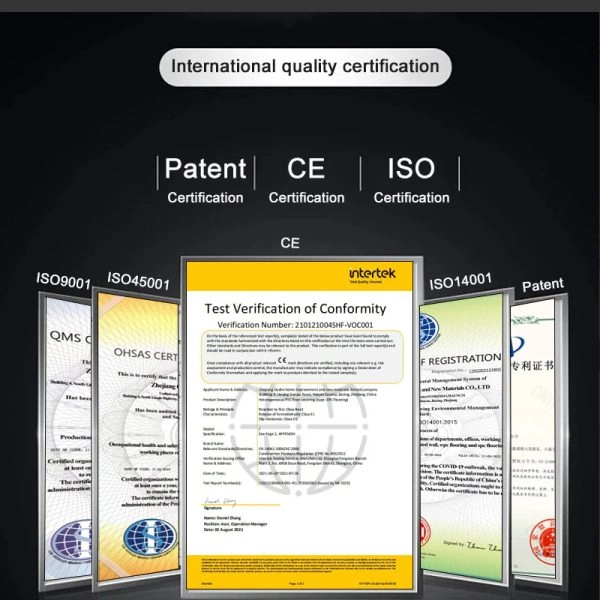
At Latitude Interiors, we focus on premium-grade WPC wall panels and flooring. The panel solutions use refined sandalwood powder and SG-8 resin, giving them a tight structure and a more natural finish. Our WPC flooring is also popular because its thicker composite core sits well over most subfloors—no complicated prep needed.
If you’re looking for interior materials built for long-term stability and better texture, we’d be happy to help.
Contact Us:
Email: MIA_MIAO@AUTHOE.CN
Website: www.latitude-interiors.com
Phone: +86-15857366115
FAQ
Q: Is WPC better than PVC for bathrooms?
A: Both work in bathrooms. WPC feels sturdier and thicker; PVC installs faster and costs less.
Q: Why is WPC more expensive?
A: Because the raw materials—wood fibers, stone powder, SG-8 resin—aren’t cheap, and the panels are denser. But WPC usually lasts longer indoors.
Q: Is WPC good for high-humidity rooms?
A: Yes. Kitchens, laundry rooms, bathrooms—WPC stays stable without swelling.