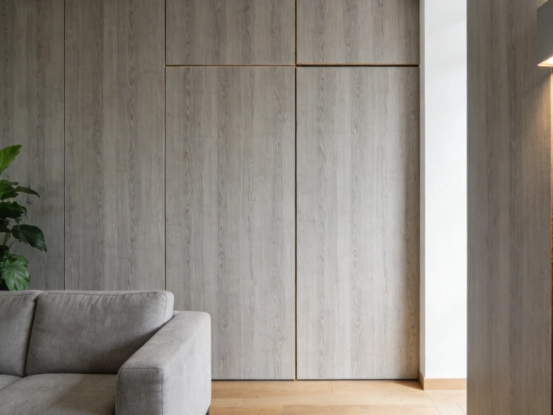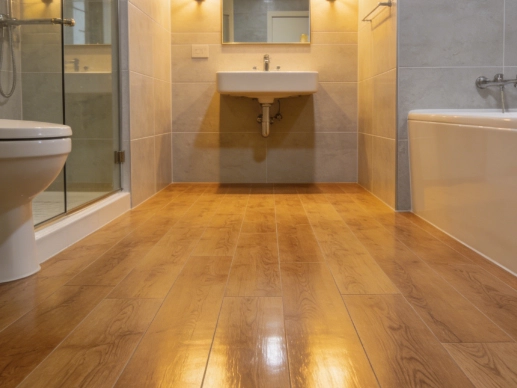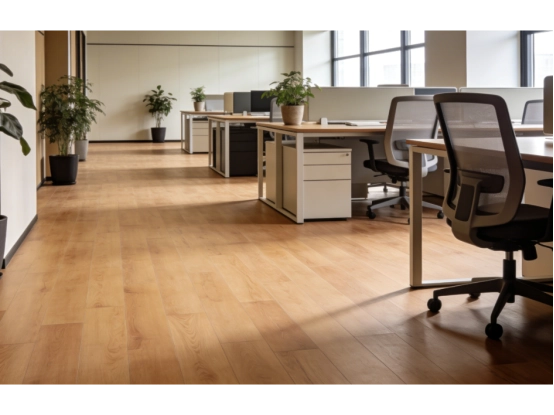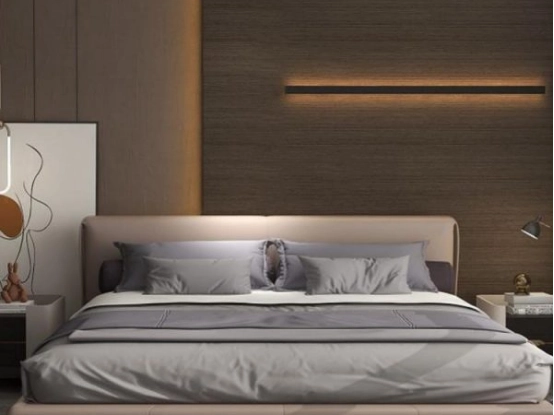
WPC wall panels didn’t become popular overnight. A few years ago, they were still seen as a “new material.” Now, they’re showing up everywhere—shopping malls, hotel corridors, office lobbies, cafes doing quick upgrades. The reasons are practical. They don’t swell easily. They hold their shape. And they handle indoor humidity better than most traditional boards.
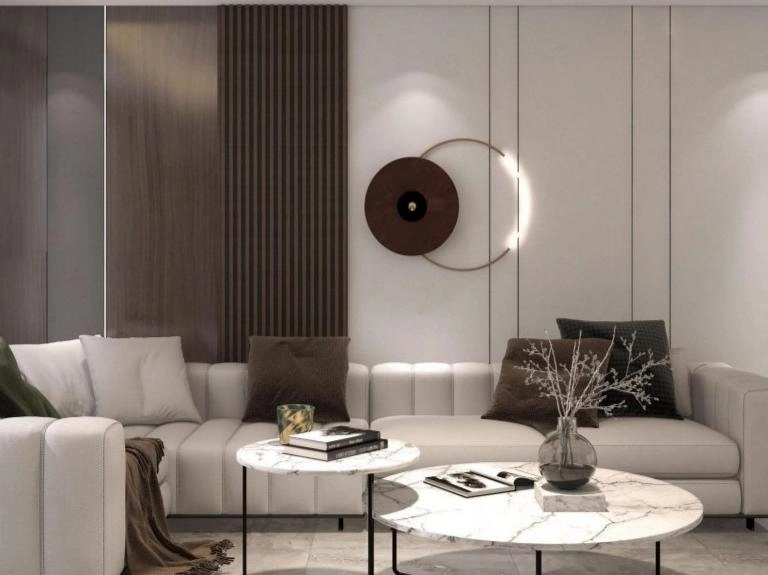
But performance alone isn’t why designers keep choosing them. The surface finish matters just as much.
How the Surface Finish of WPC Wall Panels Is Created
One thing is often misunderstood in the market, so it’s worth clearing up early.
The color and texture of WPC wall panels come from decorative color film applied during factory production.
These panels are not meant to arrive as a blank surface. When they leave the production line, the look is already finished. The grain, tone, and texture are locked in before the panels are packed and shipped.
This approach avoids a lot of problems that show up later on site—uneven tones, panel-to-panel differences, or visible color shifts under lighting. For large commercial interiors, that consistency saves time and arguments.
Latitude Interiors focuses on film-finished WPC wall panel services. Installers often describe the panels in simple terms: unpack, install, done. That kind of predictability matters when deadlines are tight.
Types of WPC Wall Panels and How They Work with Color Film
Solid WPC Wall Panels
Solid WPC panels have a dense, full-core structure. Pick one up and the weight is obvious. That mass gives them good stiffness, which helps them stay flat over time.
They are commonly used in places where walls take some abuse—retail stores, clinics, restaurants, and public corridors. In these environments, decorative color film holds up well and keeps the surface looking consistent, even after years of daily use.
Hollow / Core WPC Panels (Great Wall Board)
Great Wall Boards are easy to recognize once you’ve handled them. The internal cavities reduce weight, which makes installation faster on large wall areas.
They show up a lot in offices, hotels, and public buildings where long, continuous walls are common. Decorative color film plays an important role here. When dozens—or hundreds—of panels are installed side by side, even small color differences become obvious. Factory-applied film keeps everything aligned visually.
Co-Extruded WPC Panels
Co-extruded panels add a protective outer layer around the core material. The appearance still comes from decorative color film, but the surface handles daily contact better.
These panels are often chosen for commercial interiors where cleaning is frequent. Think meeting rooms, shared spaces, or areas near entrances. The finish stays neat without demanding extra care.
WPC Fluted / Slatted Panels
Fluted and slatted panels are used less for coverage and more for effect. They add depth, rhythm, and shadow to a wall.
Decorative color film highlights these profiles. Light hits the grooves differently throughout the day, which gives the wall more movement than a flat surface. That’s why these panels show up in reception areas, feature walls, studios, and conference rooms where first impressions matter.
Decorative Color Film Finishes for WPC Wall Panels
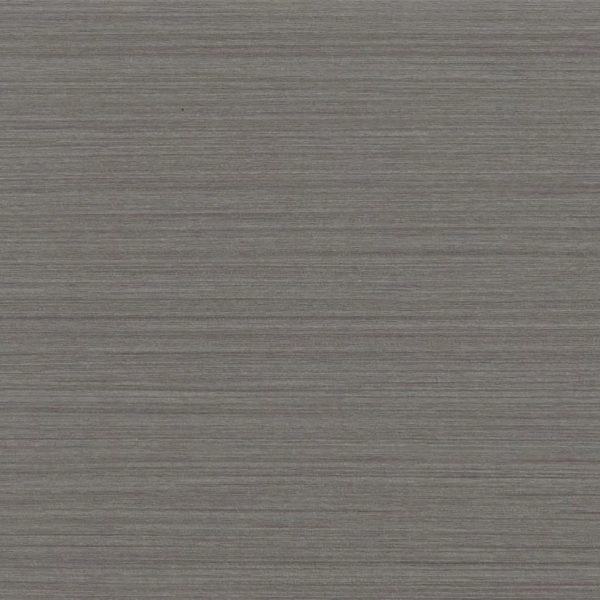
For indoor applications, decorative color film is the standard way WPC wall panels get their final look. The film is applied under controlled factory conditions, not on site. That matters more than it sounds.
In real projects, walls are rarely installed all at once. Different batches arrive at different times. Lighting conditions change. Decorative color film helps keep everything visually aligned from the first panel to the last.
The range of finishes has also expanded. Wood grain remains the most popular, especially warm oak and walnut tones. Neutral solid colors are increasingly common in office interiors. Stone-inspired textures show up in hospitality projects where designers want something different without adding maintenance.
Why Decorative Color Film Remains the Standard in 2025
Decorative color film defines the final surface during production. Once applied, the look is fixed and checked before delivery.
This process avoids the variations that can happen when surface appearance is handled after installation. For contractors, it reduces rework. For designers, it means the sample approved early in the project still matches the finished wall months later.
That reliability is one reason decorative color film continues to dominate indoor WPC wall panel projects in 2025.
Practical Advantages Seen on Real Projects
Consistent Appearance Across Large Areas
On a small wall, minor differences might go unnoticed. On a hotel corridor or shopping mall interior, they won’t. Decorative color film keeps the surface uniform from panel to panel.
Lower Ongoing Maintenance
Film-finished surfaces are easy to clean and don’t demand special care. That’s a big reason they are chosen for commercial interiors with steady foot traffic.
Flexible Design Choices
From light Scandinavian tones to darker, more dramatic finishes, decorative color film supports a wide range of design styles without changing the core panel structure.
Material Structure and Surface Stability
WPC wall panels are made from wood powder, plant fibers, calcium carbonate, and polymer resin. This mix gives the panels the look of wood with better dimensional stability.
When decorative color film is added, the surface holds up well against normal indoor conditions. Temperature changes, air conditioning, and seasonal humidity shifts are less likely to affect appearance.
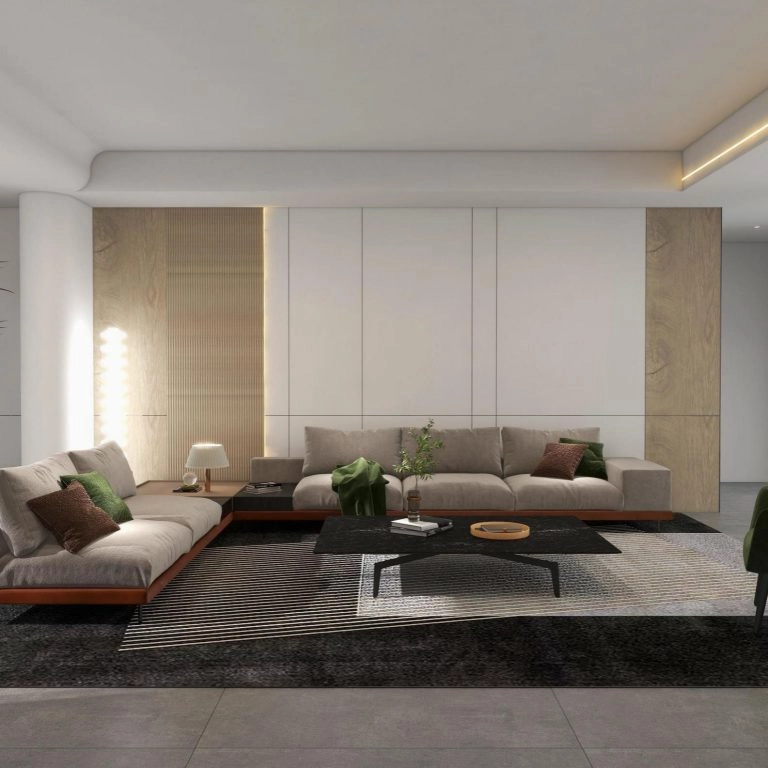
In 2025, decorative color film remains the standard surface finish for indoor WPC wall panels. It delivers a finished look directly from the factory, with consistent color and texture across the entire project.
WPC wall panels are designed to be installed as complete products, not unfinished materials. For projects that require reliable surface quality and visual consistency, Latitude Interiors supplies decorative color film WPC wall panel solutions along with technical support and OEM/ODM services.
FAQ
Q: Are WPC wall panel colors finished during production?
A: Yes. Decorative color film is applied during manufacturing, so panels arrive with a complete and uniform surface.
Q: What surface finish is most common for indoor WPC wall panels in 2025?
A: Decorative color film remains the most widely used finish due to its consistency, durability, and design flexibility.