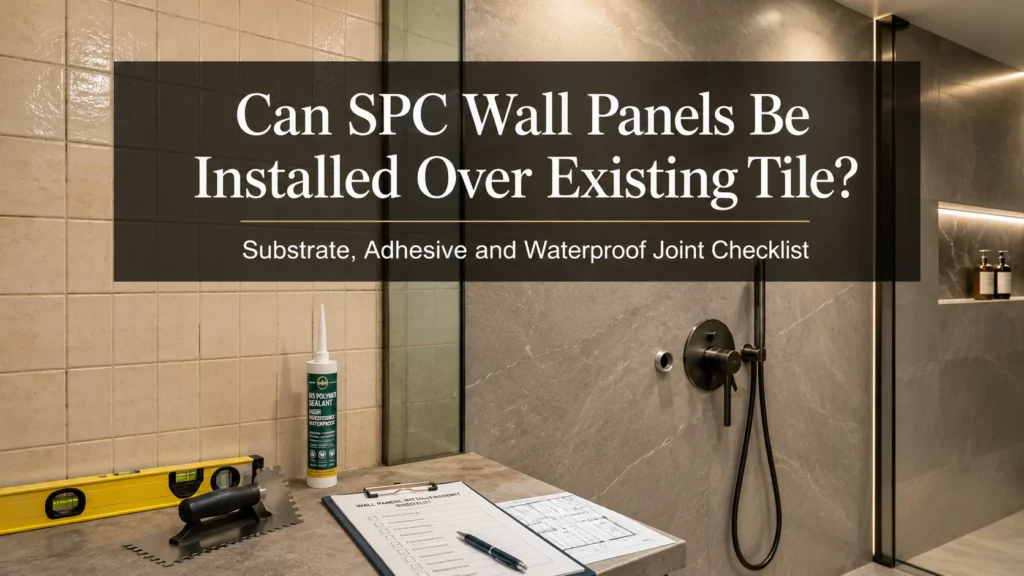
An SPC wall panel thickness guide helps contractors and distributors choose panels that match wall condition, installation method, handling requirements, and project risk. A 3mm, 5mm, or 8mm SPC wall panel may look similar after installation, but the wrong thickness can lead to cutting difficulty, uneven joints, edge damage, higher waste, or unnecessary material cost.
For commercial bathrooms, shower walls, hotel renovations, apartments, and public restrooms, thickness should not be selected by price alone. It should be matched to the substrate, panel size, finish, installation accessories, and expected site conditions.
Why SPC Wall Panel Thickness Matters in Commercial Projects
SPC wall panel thickness affects how the panel is handled, cut, installed, and finished. Thinner panels are lighter and may be easier to transport, but they depend more on a flat and stable wall surface. Thicker panels may feel more rigid, but they can require more careful cutting, edge treatment, and trim compatibility.
For contractors, thickness also affects labor planning. A panel that is too thin for an uneven wall may show surface irregularities after installation. A panel that is too thick for the selected trim or corner system may slow down installation and increase site adjustment work.
Thickness Should Match the Wall Condition
Before selecting 3mm, 5mm, or 8mm SPC wall panels, the wall should be checked for flatness, moisture exposure, surface strength, and existing coverings. If the project involves bathroom renovation or shower wall replacement, sealing, corners, and joints should be reviewed together with thickness.
3mm vs 5mm vs 8mm SPC Wall Panels
Different thicknesses fit different project conditions. The correct choice depends on application, wall quality, installation method, and buyer expectations.
| Thickness | Common Fit | Buyer Should Check |
| 3mm | Lightweight decorative covering and flat wall renovation | Substrate flatness, edge protection, surface finish |
| 5mm | General bathroom, apartment, and hotel projects | Density, panel size, finish, sample approval |
| 8mm | Higher rigidity or more demanding commercial walls | Weight, cutting, trim compatibility, project budget |
3mm SPC Wall Panels
A 3mm SPC wall panel may be considered for lightweight renovation, decorative covering, or projects where the wall surface is already flat and stable. It can be useful when buyers need easier handling and lower material weight.
However, 3mm panels should not be treated as suitable for every wall. If the substrate is uneven, damaged, or poorly prepared, a thinner panel may reveal installation defects. Contractors should inspect the wall before approving this thickness.
5mm SPC Wall Panels
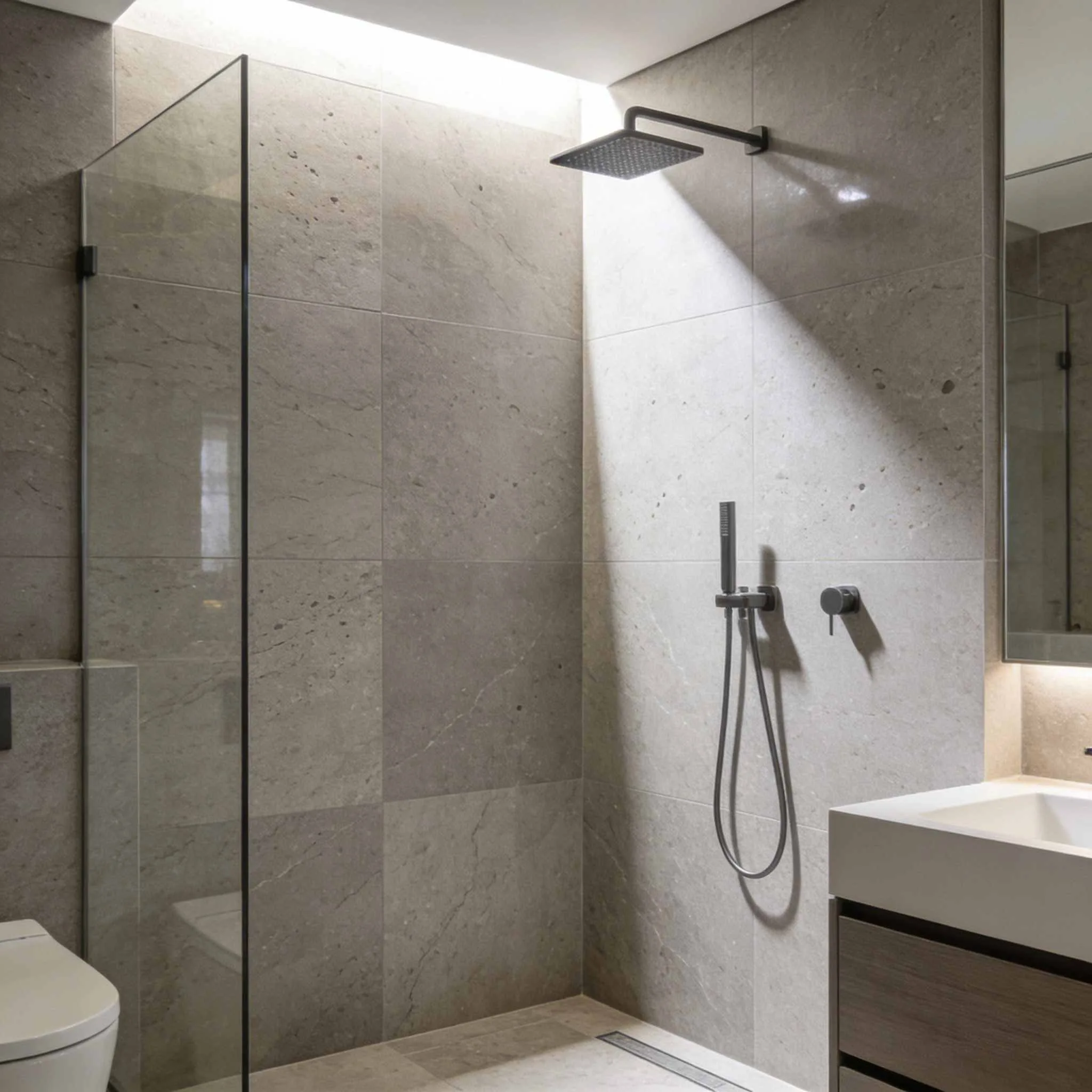
A 5mm SPC wall panel is often a practical choice for many bathroom, apartment, hotel, and commercial restroom projects. It can provide a balance between handling, rigidity, and installation flexibility, depending on the product design.
Latitude Interiors’ SPC Wall Panel category includes visible specifications such as 3mm/5mm and 5mm/8mm thickness options on selected product pages, along with size and density fields that buyers can use when preparing an RFQ.
8mm SPC Wall Panels

An 8mm SPC wall panel may be preferred when the project needs a stronger feel, higher rigidity, or better tolerance for demanding wall conditions. It may be considered for commercial bathrooms, hotel shower areas, or spaces where panels face more frequent use.
The final decision should still be verified against the product specification. Thickness alone does not replace correct sealing, trimming, wall preparation, and installation practice.
How to Match Thickness to Bathrooms, Shower Walls, and Hotel Projects
For bathroom renovation, the first question is not only “How thick should SPC wall panels be?” but also “What is the wall condition?” A flat wall may allow more thickness flexibility. A rough wall may require stronger substrate preparation before any panel thickness is selected.
For shower wall panels, thickness should work with edge finishing, corner treatment, adhesive method, and waterproof joint design. A thicker panel may need compatible trims, while a thinner panel may need better substrate support.
For hotel and apartment projects, repeatable installation matters. Contractors and distributors should confirm panel size, thickness, finish code, batch consistency, and sample approval before bulk purchasing.
Common Problems Caused by the Wrong Thickness
Choosing the wrong SPC wall panel thickness can create installation and after-sales problems.
If the panel is too thin for the wall, uneven areas may become visible. Edges may also require more careful protection during cutting, transport, and installation. If the panel is thicker than needed, buyers may face higher cost, heavier handling, and accessory mismatch.
Another common issue is ordering from photos without testing samples. Before bulk orders, physical samples should be checked for thickness, density, surface finish, color, edge quality, and compatibility with the planned installation method.
What Contractors and Distributors Should Check Before Ordering
A clear RFQ helps reduce misunderstandings between buyer and supplier. Before ordering SPC wall panels, confirm:
- Thickness: 3mm, 5mm, 8mm, or project-specific option
- Density and panel structure
- Width, length, and cutting requirements
- Surface finish and color code
- Bathroom, shower, hotel, apartment, or restroom application
- Sample approval process
- Packaging and batch labeling
- Installation accessories and trim compatibility
Latitude Interiors’ product pages show specification fields such as density, thickness, width, length, and finish on selected SPC wall panel listings. These details can help contractors and distributors compare options more clearly before quotation.
How to Choose an SPC Wall Panel Supplier
A reliable SPC wall panel supplier should help buyers match thickness to real project conditions instead of recommending one option for every use. The supplier should be able to discuss wall condition, application area, panel size, finish, target quantity, and sample needs.
Latitude Interiors supplies WPC, SPC solid core wall panels, flooring, and related interior decoration materials. Buyers can review About Latitude Interiors to understand the company profile before requesting project support.
Conclusion
The right SPC wall panel thickness depends on wall condition, application area, installation method, and project risk. 3mm panels may suit lightweight covering over flat walls, 5mm panels may fit many bathroom and hotel projects, and 8mm panels may be considered where higher rigidity or more demanding conditions are required.
For project inquiries, send wall condition, required thickness, panel size, finish, application area, target quantity, and sample requirements through Contact Latitude Interiors. Clear project details help the supplier recommend a more suitable SPC wall panel specification.
FAQs
Q1: How thick should SPC wall panels be for bathroom renovation?
A1: Bathroom renovation thickness depends on wall flatness, moisture exposure, edge finishing, and installation method. 5mm may be a practical option for many projects, while 3mm or 8mm should be verified against site conditions.
Q2: Is a 3mm SPC wall panel suitable for shower walls?
A2: A 3mm SPC wall panel may be used only when the wall is flat, stable, and properly prepared. Shower wall applications also require suitable sealing, corners, trims, and joint treatment.
Q3: When should contractors choose 8mm SPC wall panels?
A3: Contractors may consider 8mm SPC wall panels for projects that need higher rigidity, stronger feel, or more demanding commercial wall conditions. The choice should be checked against accessories, cutting method, and budget.
Q4: What should be included in an SPC wall panel RFQ?
A4: An SPC wall panel RFQ should include thickness, density, width, length, surface finish, application area, quantity, sample requirements, packaging needs, and installation conditions.