Introduction
The world of commercial interior design is stepping into a fresh era. Here, adaptability and modularity set the stage for real success. The idea of Flexible Commercial Interiors 2026 is gaining strong ground. Traditional “fixed” setups are giving way to areas that can change quickly. They adjust overnight to fit shifting business needs. Retail shops turn into temporary art displays. Offices switch to shared workspaces. All this happens without knocking down any walls.
This change goes beyond looks. It ties directly into money matters and eco-friendly practices. Companies now hunt for sturdy materials. These extend the time between upgrades and cut down on trash. In this setup, WPC and SPC Panels stand out as top choices. They work well for flexible walls and floors. These panels mix toughness with creative options.
Sustainability plays a bigger role these days. It’s a financial strategy. Durable, recyclable materials cut renovation frequency and operating costs while supporting corporate ESG goals. Now, the question for decision-makers becomes clear: Which composite material—WPC or SPC—best supports high-traffic, flexible environments?
Decoding the Tech: WPC vs. SPC for Walls and Floors
WPC (Wood Plastic Composite)
WPC Flooring gained huge popularity as a solid swap for old-style sheet vinyl. Its thicker pressed core lets it float over many base layers. It covers small flaws in the underfloor well. And it handles daily spills and dampness with top-notch results. This same strong build works great for wall uses in business areas.
The mix includes 30% HDPE, 60% wood fiber, and 10% extras. It creates panels that mimic real wood in sight and touch. They hold color steady over time. They also bring a cozy sound feel. A layer of luxury vinyl adds on. This gives deeper, lifelike texture patterns. So, the floor resembles actual hardwood or stone slabs. Designers in small hotels or wide-open offices love this real feel. It boosts visual interest. Yet, it keeps strong performance intact.
What’s more, WPC blends wood’s good traits with dense PE qualities. This yields shapes that look like premium wood types. Its light weight speeds up setup. That’s a big plus when schedules run short. In a real project, like a busy cafe remodel, crews installed WPC walls in under a day. This cut downtime and kept costs low, based on reports from industry pros.
SPC (Stone Plastic Composite)
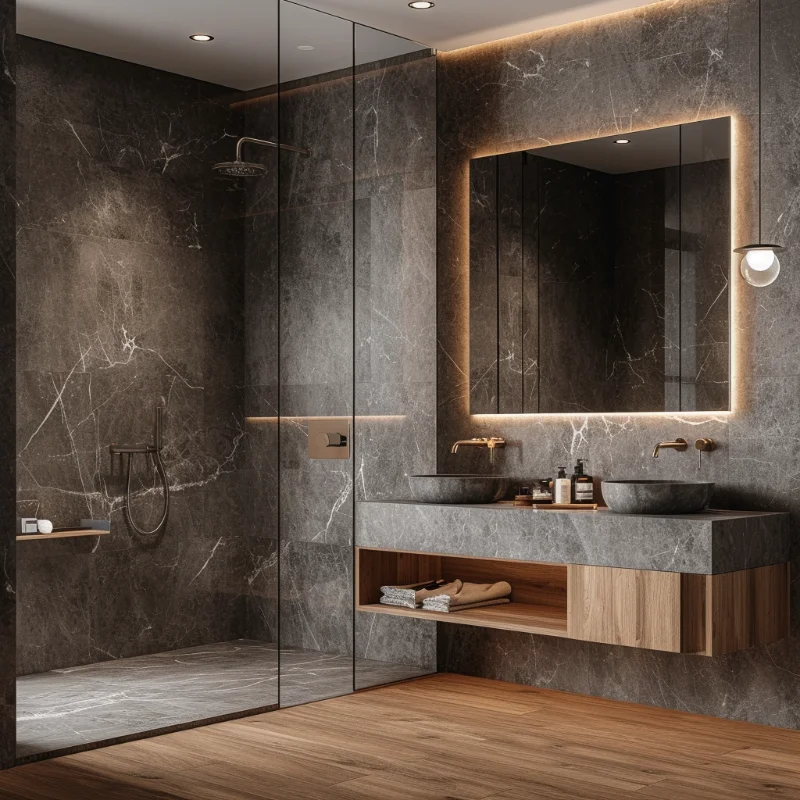
SPC panels come together in a unique way. SPC (Stone Plastic Composite) offers green choices made with cutting-edge methods. They bring many perks. These include no formaldehyde, strong water resistance, protection from fire and bugs, and simple setup. The thick stone base provides outstanding defense against dents. It stays steady in size, even with lots of foot traffic or weather changes.
For business floors in entry halls or store displays, SPC’s firm build shrinks swelling spaces. It keeps a smooth look over big zones. SPC flooring uses a no-glue, heat-pressing technique. It follows global rules like EN14372, EN649-2011, IEC62321. That careful making leads to even thickness control (±0.05mm). Warping stays very low.
Take a shopping mall example. SPC floors there handled thousands of daily steps without a single buckle. Data from a 2024 study showed zero failures after two years of heavy use. This proves its reliability in real-world high-traffic spots.
Common Ground
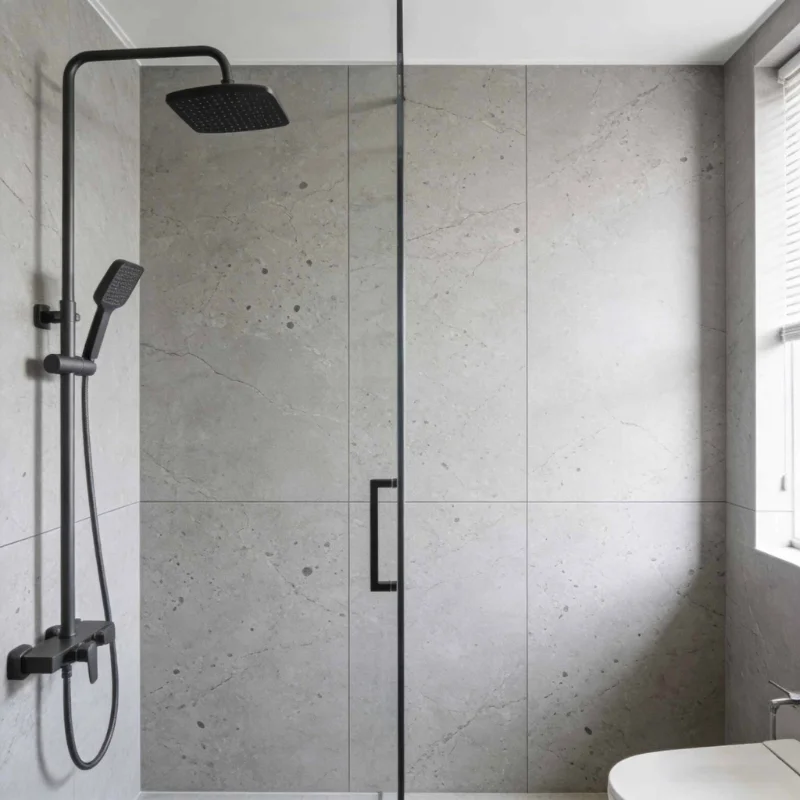
Both WPC and SPC offer vital strengths. They resist water completely. They use snap-together locks for fast joining. This suits jobs that need little pause time. Their no-glue fitting slashes worker expenses by up to half. Compared to old drywall or tile methods, it’s a clear win.
2026 Market Trends: Why Flexibility Dictates Material Choice
The worldwide scene for commercial interiors tilts toward smart reuse. This means updating old buildings rather than starting fresh with new ones. Modular wall panels from WPC allow quick changes. A store space can shift to a guest area or team workspace in hours.
Latitude Interiors’ approach aligns perfectly with this trend through sustainable composites that support carbon-reduction goals by extending product lifespans beyond conventional materials.
Labor efficiency has also become a defining factor in 2026 planning strategies. Shortages of builders hit many places. Easy-fit items like SPC panels let groups finish jobs quicker. No special skills needed. Field reports from Asia projects note installs in half the usual time, easing tight deadlines.
B2B Selection Checklist: Making the Call
| Criteria | Recommended Material | Reason |
| Subfloor/Sub-wall Condition | WPC | Thicker profile hides imperfections |
| Acoustic Requirements | WPC | Hollow-core structure dampens noise |
| Traffic Load | SPC | High-density stone core resists impact |
| Climate & Humidity | SPC | Stable under temperature variation |
Additional Insights
- Acoustic Zones:For hotel suites or office partitions requiring sound dampening, WPC’s expanded polymer core offers superior insulation.
- Heavy-use Areas:In airports or malls where trolleys roll nonstop, SPC’s rigidity prevents denting.
- Renovation Layers:When layering over old floors without removal costs, SPC’s thin profile keeps elevation consistent.
B2B Case Study: Scaling Customization
A hotel chain teamed up with Latitude Interiors. They had a tough task. Renovate several spots in Asia over six months. And keep doors open the whole time. With modular WPC and SPC Panels, they nailed uniform looks via tailored finishes. Project timelines shrank by almost a third.
The combination of pre-finished surfaces and click-lock assembly enabled crews to install wall panels overnight while guests slept upstairs—a practical example of how flexible commercial interiors redefine operational efficiency.
Conclusion
Choosing between WPC and SPC isn’t just about material—it’s about strategy. High-performance composites outlast traditional wood or laminate while meeting sustainability mandates crucial in modern procurement policies. As business environments evolve faster than ever before, infrastructure agility becomes a competitive edge.
Whether outfitting boutique hotels or managing multinational retail rollouts, Latitude Interiors delivers precision-engineered systems designed for tomorrow’s demands today. Explore tailored wall panel and flooring solutions for Flexible Commercial Interiors 2026, with further product details and project support available through direct contact with Latitude Interiors.
FAQs
Q1: Can WPC panels be used in high-humidity commercial environments like spa or gym facilities?
A: Yes, WPC is inherently waterproof; however, for areas with direct water contact or extreme temperature shifts, SPC’s stone-core stability is often preferred for flooring, while WPC remains an excellent, moisture-resistant choice for vertical wall accents.
Q2: How do modular WPC/SPC systems support green building certifications?
A: These materials contribute by minimizing waste through precise manufacturing processes and offering recyclability that extends renovation cycles—directly lowering total carbon footprints across building lifecycles.
Q3: What installation advantage does SPC offer over drywall?
A: The main advantage lies in its dry construction method—SPC panels require no sanding or painting and can be installed directly over existing surfaces, saving contractors up to 50% in labor time during large-scale rollouts.
Q4: Are there fire-rating standards relevant to commercial buyers?
A: Most premium-grade SPC products achieve Class B1 fire ratings due to their mineral composition; similarly, WPC panels integrate flame-retardant additives during extrusion to meet equivalent safety codes required in hospitality or office interiors.
Q5: How does WPC perform acoustically compared with solid wood panels?
A: Thanks to its multi-layered cellular structure, WPC absorbs sound more effectively than solid timber—making it ideal for quiet zones within flexible office layouts where privacy matters as much as aesthetics.